MCN's Environmental and Occupational Health Program Initiatives
Primary Care and Environmental and Worker Health
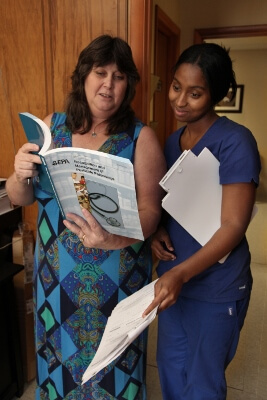 MCN works with front-line providers to integrate a focus on environmental and occupational health into primary care. Our projects strengthen the quality of care and meet the unique health care needs of our communities. MCN recognizes that the majority of primary care clinicians generally do not bring an environmental and occupational health perspective to the care they provide. MCN focuses on feasible, simple changes in clinical practices to improve the recognition and management of occupational exposures and injuries.
MCN partners with community health centers across the US and Puerto Rico to establish Centers of Excellence in Environmental and Occupational Health. These partnerships include on-site clinical training, the provision of resources and technical assistance, and peer-to-peer networking between front-line providers and occupational and environmental medicine specialists.
MCN also conducts research to explore barriers to occupational health in primary care.
Heat-related Illness
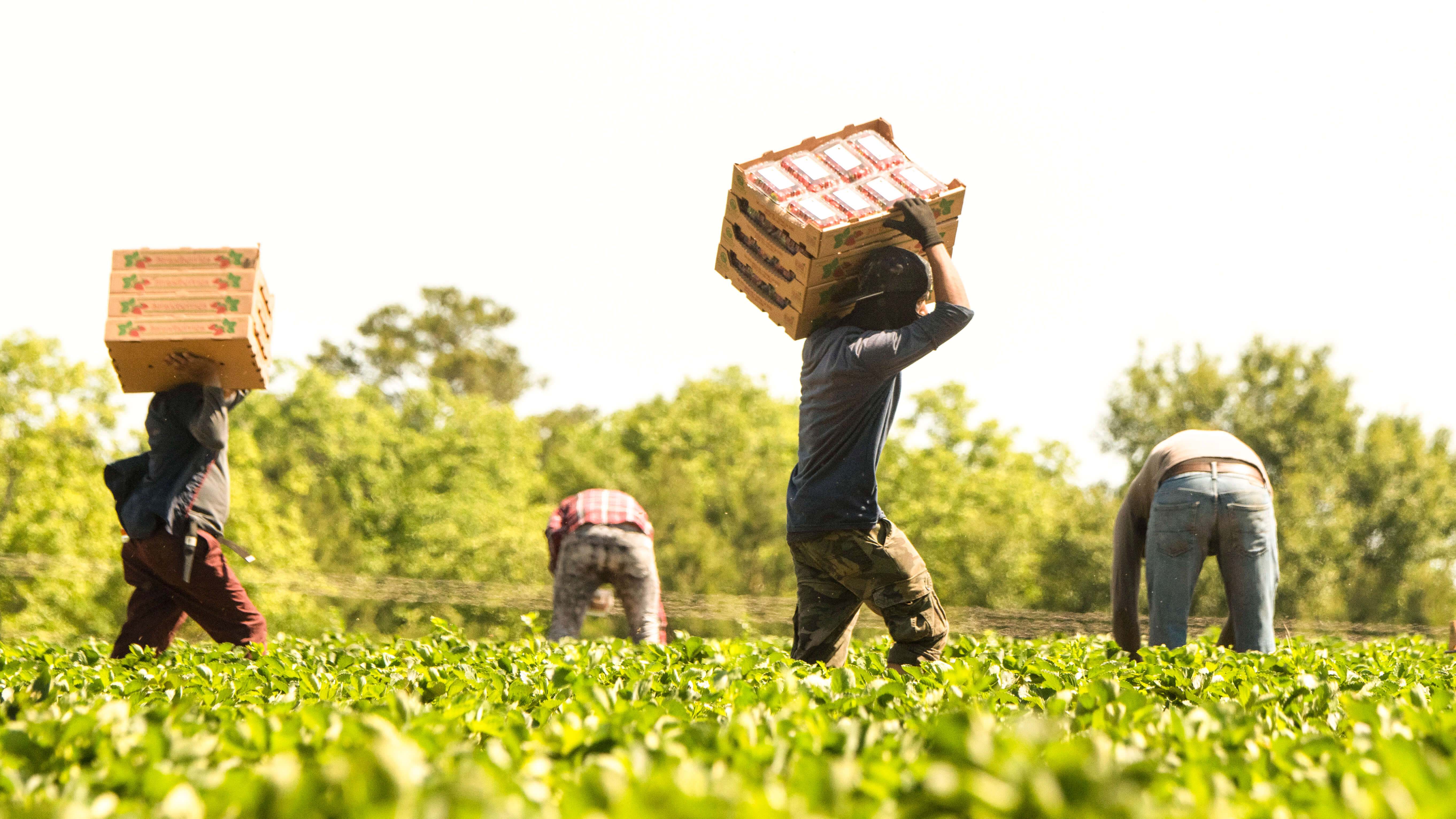 Heat-related illness is a major and growing risk for all outdoor workers. The number of extreme-heat days is increasing throughout the world. Farmworkers’ risk of dying from heat exposure is 35 times higher than for workers in other industries. It’s not just temperature; workers come to work already dehydrated which increases their risk of heat-related illness. Once they arrive at work, many are paid piece-rate, which discourages workers from taking time for rest and bathroom breaks, which further discourages water consumption. Workers may be discouraged by employers or contractors to take time to rest in the heat, or workers may feel that issuing a complaint may jeopardize their job.
These are just a few examples of how heat stress is not simply a result of high temperatures, but a confluence of limitations to workers’ ability to avoid heat stress when state or federal regulations do not protect them. MCN works to provide clinicians and other front-line providers with tools to increase their own knowledge and skills around heat-related illness, as well as providing important worker education materials. Additionally, MCN experts serve as key advocates for heat-related standards in states as well as in advocacy for a national heat illness standard.
Visit MCN's Heat-related Illness page to view and download resources.
Dairy Worker Health and Safety
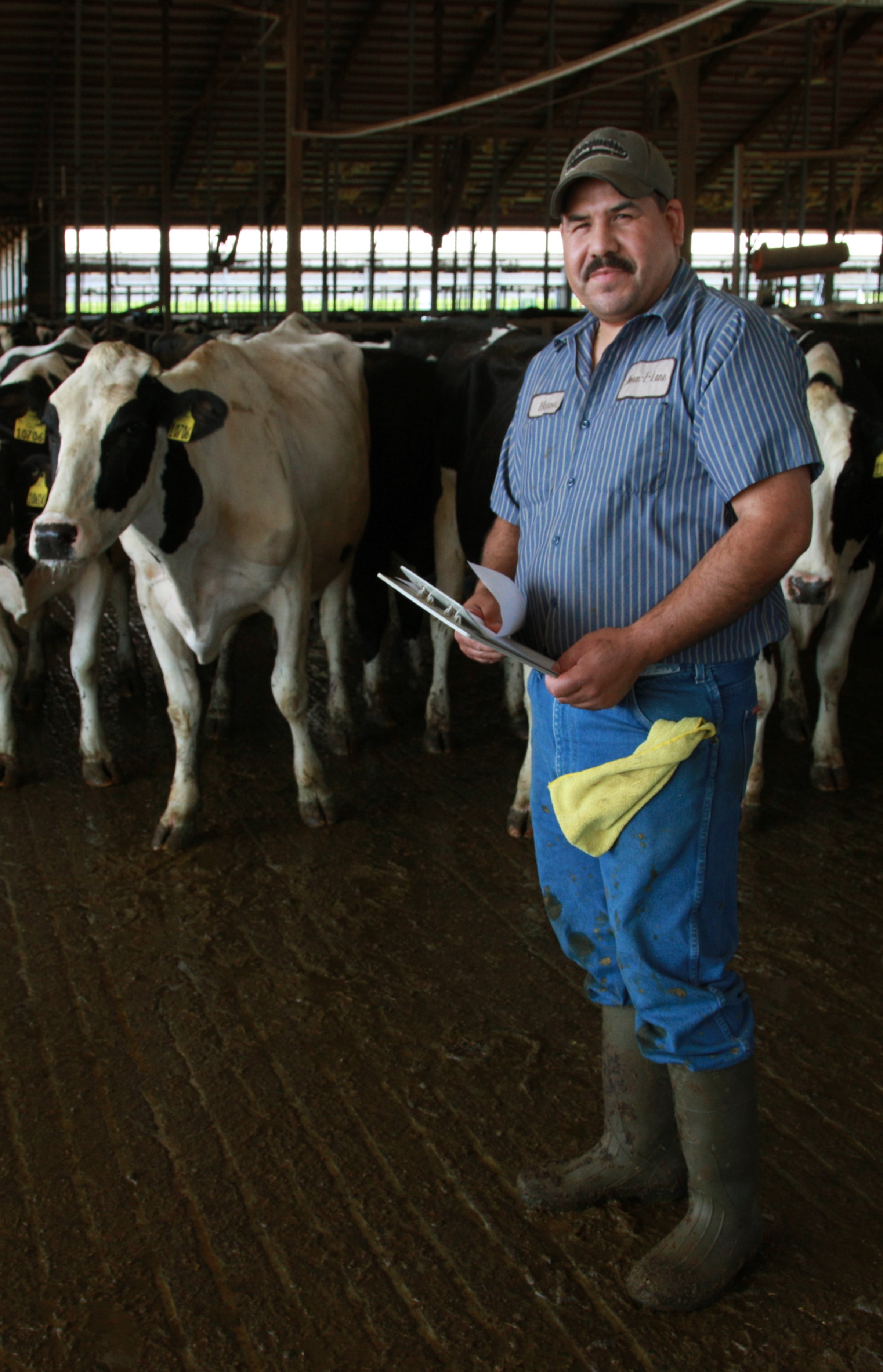 Even before the arrival of H5N1 on dairy farms in the US, dairy workers and their families faced unique environmental and occupational health risks. Work in agriculture is one of the most dangerous occupations in the US.
Read more about MCN’s work supporting and advocating for dairy workers in the H5N1 outbreaks on dairy farms on our Avian Flu page.
MCN and the National Farm Medicine Center have long partnered to provide health and safety training to foreign-born dairy workers in Wisconsin. The Seguridad en las lecherias project targets limited English proficient workers with safety messages that meet their needs. The project also tests the use of a promotores de salud model to reinforce the safety messages and support increased worker safety. The five-module curriculum and accompanying resources are available to view and download via MCN's Seguridad en las lecherías webpage.
This effort was part of the Upper Midwest Agricultural Safety and Health Center based out of the University of Minnesota. It was one of several dairy-focused projects targeting low-literate, limited English proficient, hard to reach immigrant workers.
Through the Susan Harwood Training Grant, MCN developed OSHA-approved training and educational materials for immigrant dairy workers. MCN's training modules incorporate English-as-a-Second-Language (ESL) learning activities with safety and health trainings. The bilingual picture dictionary, developed to complement the training modules, includes important vocabulary and image-based safety messages to be utilized in agricultural work places and further adapted for other industries. Visit MCN's ESL Dairy Health & Safety page to view and download lesson plans and accompanying resources.
Worker Safety and Health Train-the-Trainer
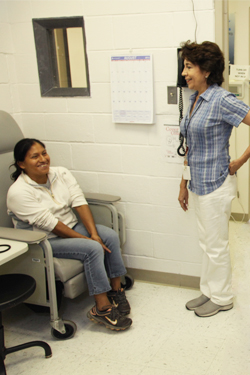 Every day, millions of workers face potentially life-threatening risks from hazards such as chemicals, machinery, ladders, and temperature extremes. For foreign-born workers, challenges including language, workplace protection gaps, and legal issues further their vulnerability and increase their risk of on-the-job injuries and even death. To help workers better protect themselves on the job, MCN strives to integrate environmental and occupational health into community settings through projects that utilize community health workers to spread education to people employed in high-risk occupations. MCN partners with community organizations to facilitate health and safety training for workers through a train-the-trainer model. The target population for these projects include workers employed in agriculture, meat packing, construction, nail salons, cleaning, and restaurants.
MCN’s work in occupational health and safety also includes a Community Health Worker (CHW) webinar series which highlights best practices in worker training on various topics including chemical safety, work-related asthma, heat stress, ergonomics and injury prevention, and the Worker Protection Standard. Additionally, MCN offers webinars designed specifically for clinicians who treat individuals employed in high-risk occupations.
Children's Safety and Environmental Health
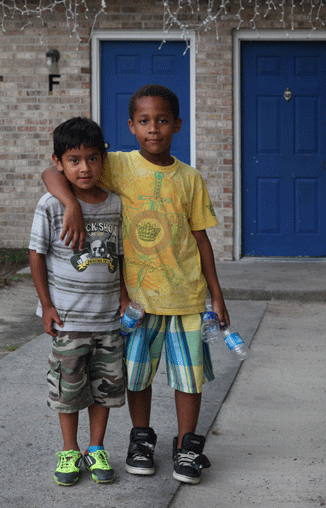 Farmworker children are uniquely at risk of environmental and other hazards as their homes are often located near agricultural fields. Pesticide drift is an important hazard along with paraoccupational exposure in which parents can unknowingly expose their children via their work clothing and shoes worn in their home. They many face further risks if they accompany their parents to work. MCN has a long-standing commitment to understanding and addressing the needs of farmworker children through community health and safety outreach efforts and has implemented clinical, research, policy, and outreach projects to improve the environmental health needs of these children.
Since 2001, MCN has partnered with the National Children's Center for Rural Agricultural Health and Safety to further our work to improve the health safety of children of farmworkers. Wide-ranging projects include the 2012 Blue Print for Protecting Children Agriculture: A National Action Plan and the Roadmap for Delivering child Care in Agricultural Communities.
MCN has also partnered with various community organizations to implement train-the-trainer programs in which parents are trained as community health workers to reach farmworker families with education on how to minimize children's exposure to environmental hazards, including pesticides, lead, and asthma triggers.
Educational Materials
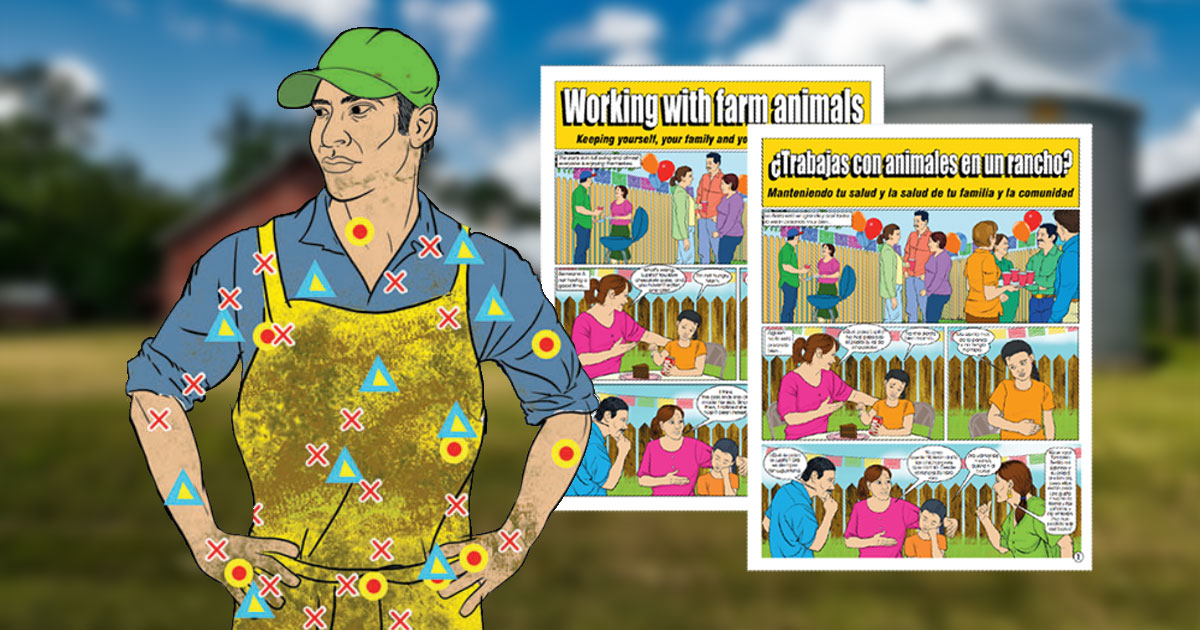
MCN's educational materials target workers and their families and utilize relevant formats to convey health and safety messages.
NEW COMIC: WORKING WITH FARM ANIMALS
MCN’s efforts in environmental and occupational health include development and distribution of clinical and patient resources; training of clinicians and stakeholders through webinars, conferences and onsite workshops; research; and extensive partnerships with community health centers and with organizations with expertise in pesticides, occupational and environmental medicine, and worker safety. MCN has developed a number of patient education materials and training programs for community health workers to educate workers about their rights, workplace hazards, and ways to stay safe on the job. MCN also implements community health worker programs to train farmworkers about the risks from pesticide exposure and ways to protect themselves and their families. MCN distributes thousands of resources each year.
Clinical Tools
In collaboration with partners and experts in occupational and environmental medicine, MCN has developed tools for clinicians to translate need to practice.
MCN's Environmental and Occupational Health Partners
MCN partners with organizations throughout the country to strengthen our ability to offer frontline clinicians expertise in primary care for immigrant and migrant agricultural workers, occupational and environmental medicine, migration health and worker protection.
Farmworkers Association of Florida
National Children's Center for Rural Agricultural Health and Safety
Association for Occupational and Environmental Clinics
American College of Occupational and Environmental Medicine
American Public Health Association (Occupational Health and Safety Section)
NIOSH-funded Agricultural Health and Safety Centers
Wake Forest University Worker Health Center
National Center for Farmworker Health
Upper Midwest Agricultural Safety and Health Center
Is Your Clinic Ready For an Emergency?
**Many of MCN’s EOH efforts are supported through cooperative agreements with the US Environmental Protection Agency as part of their National Strategies for Health Care Providers: Pesticide Initiative. The conclusions and opinions expressed herein are those of MCN and do not necessarily reflect the positions and policies of the U.S. EPA.
Photos by Earl Dotter