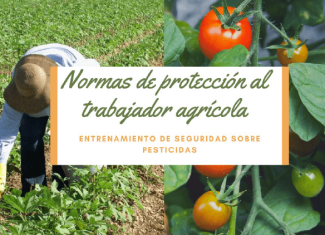
Worker Protection Standard Pesticide Safety Training Curriculum - Culturally and linguistically appropriate curriculum with supporting resources for training workers on the revised Worker Protection Standard. Developed by the Florida State University PISCA Project and Migrant Clinicians Network.
Download Resource
- WPS PesticidasEnglishFINAL4_2021Website.pptx (33.52 MB)
- WPS PesticidasSpanishFINAL4_2021_Website.pptx (19.67 MB)
- WPSPesticidesFlipChartFINAL_1_23_2020.pdf (8.32 MB)
- WPS Pesticide Facilitator Guide English 2020.pdf (2.03 MB)
- WPS Pesticide Training Facilitator Guide Spanish 2020.pdf (1.99 MB)
- Juan Abre los Ojos como protegerse de los pesticidas (01 14 2020)_0.pdf (7.25 MB)
DATE: May 24, 2017, 1 pm (ET)
SPEAKERS: Juliana Simmons, MSPH, CHES
Recorded WebinarParticipant EvaluationPresentation SlidesResources
Continuing Education Credit
To receive CME* or CNE credit after viewing this webinar, you must:
Complete the Participant Evaluation associated with this webinarSend an email with your first and last name stating which webinar you completed to contedu@migrantclinician.orgDescription
José Navarro was excited for his new career after landing a job in the poultry industry. After five years on the job, 37 year-old Navarro began coughing up blood. He died soon after when his lungs and kidneys failed. His death triggered a federal investigation raising questions about the health risks associated with the use of toxic chemicals in poultry plants.
Millions of workers are exposed to chemicals everyday on the job. All workers have the right to know about the chemicals they work with and community health workers can be an important source of information and support for workers. This workshop will teach community health workers how to explain what happens when someone is exposed to chemicals and how workers can best protect themselves
Learning ObjectivesRecognize how workers become exposed to chemicals and illnessesDescribe basic safety practices when working around chemicalsUnderstand the role of community health workers in identifying and preventing work related illnesses and hazards
This project is supported by the Health Resources and Services Administration (HRSA) of the U.S. Department of Health and Human Services (HHS) under cooperative agreement number U30CS09742, Technical Assistance to Community and Migrant Health Centers and Homeless for $1,094,709.00 with 0% of the total NCA project financed with non-federal sources. This information or content and conclusions are those of the author and should not be construed as the official position or policy of, nor should any endorsements be inferred by HRSA, HHS or the U.S. Government.
The manual is a guide that can be used by community workers, educators, and health promoters for their educational activities in the community. It provides information on the risks of exposure to environmental contaminants and pesticides and ways to reduce those risks. It also includes useful information and tips for working in the community.
As for the comic book, community workers, educators and health promoters can use it as an educational tool to inform their community about the risks of environmental contaminants and pesticides.
Download Resource
- pocovenenocomicless20.pdf (16.8 MB)
- A LITTLE POISON WILL IT KILL YOU_June-2019.pdf (5.14 MB)
- Poco Veneno No Mata 2nd Edition - June2019.pdf (5.27 MB)