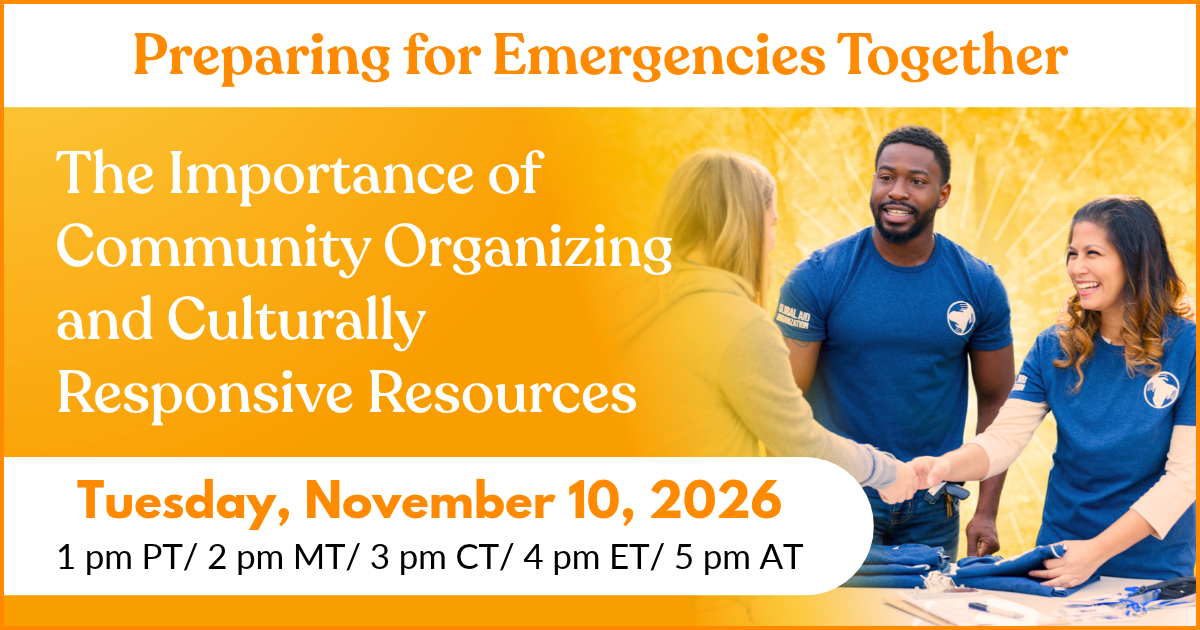
The Importance of Community Organizing and Culturally Responsive Resources
How can a clinic, a health department, or a community health organization effectively prepare for a disaster? Community connection is key! Climate-fueled disasters are hitting our communities right now, often while our communities are already reeling from other emergencies like outbreaks or immigration enforcement. Good emergency preparedness requires more than a response plan; it depends on strong partnerships, trusted communication, and the inclusion of community voices before, during, and after a disaster.
This second part of Migrant Clinicians Network's webinar series will introduce the concept of Community Organizations Active in Disaster (COADs) and Voluntary Organizations Active in Disaster (VAODs), and explain how communities can organize across sectors, connect to emergency resource streams, advocate for needed support, and gain greater participation in decisions that affect them. Health Department and Community Health expert speakers will highlight Migrant Clinicians Network resources, discuss the importance of Community Health Workers in emergency preparedness planning, and provide practical tips for increasing multicultural community influence in emergency planning. Participants will leave with a stronger understanding of how collaboration and community-centered planning can improve emergency response for the communities they serve.

At the conclusion of the presentation, participants will be able to…
- Explain the roles of Community Organizations Active in Disaster (COADs) and Voluntary Organizations Active in Disaster (VOADs) in strengthening community emergency preparedness.
- Identify strategies for building cross-sector partnerships, connecting communities to emergency resources, and incorporating community voices into disaster planning and response.
- Apply practical approaches to engage Community Health Workers and increase multicultural community participation in emergency preparedness decisions.
Presenters
Hannah G. Arnett is the Community Engagement and Capacity Building Lead in Office of Emergency Preparedness and Response (OEPR) at the NYC Department of Health and Mental Hygiene. Prior to her time at NYC DOHMH, Arnett worked at community-based organizations centering on children, youth, and families before transitioning into emergency management roles that span community-based, non-profit and government, including Occupy Sandy, United Methodist Committee on Relief (UMCOR) and FEMA.
During Hurricane Sandy recovery, she founded and led a long-term recovery group (LTRG) in Rockaway, Queens and a citywide coalition of LTRGs. At NYC DOHMH, she led the development of a grant program for community emergency networks (COADs), engaged in the visioning and implementation of a community engagement section within the agency's Incident Command System (ICS) and has played a crucial role in public health emergency response efforts in New York City, including measles and COVID-19.
Arnett is a skilled coalition builder who believes in collective problem solving, trying new things and the power of the people. She is a long-time community gardener and justice advocate who enjoys farming small spaces and hanging out with friends and neighbors on her stoop in Brooklyn.
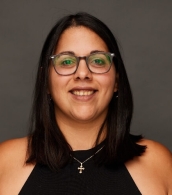
Marysel Pagán Santana, DrPH, MS, serves as Director of Environmental and Occupational Health of Migrant Clinicians Network in Puerto Rico, where she leads and coordinates MCN projects related to occupational health, disaster preparedness, and emergency response. She is also the organization's lead for the Caribbean Office. Dr. Pagán Santana provides technical assistance, training, and tool development for community health centers in Puerto Rico and the communities they serve to address disaster-related issues and health-related impacts.