DATE RECORDED: Wednesday, June 17, 2014
PRESENTED BY: Matthew Keifer, MD, MPH, Dean Emanuel Endowed Chair/Director National Farm Medicine Center
 |
|
 |
 |
 MCN’s Environmental and Occupational Health Programs
Learn more about MCN’s training and technical assistance programs to help clinicians and health centers improve the recognition and management of pesticide exposures and other environmental/occupational health conditions.
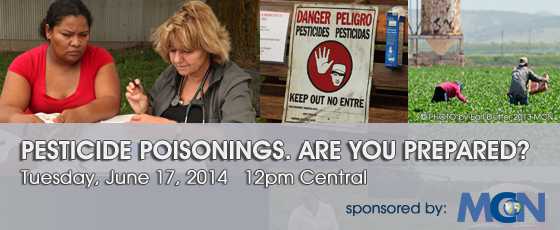
Mistakes can be dangerous. Accurate identification of pesticides responsible for a patient's illness is important to avoid iatrogenic errors with respect to acute treatment. Join us for an important webinar that will focus on key decision points in the diagnosis of pesticide exposures and emphasize the usefulness of the newly revised resource for clinicians - The Recognition and Management of Pesticide Poisonings, 6th ed. Through interactive case studies, this webinar will illustrate effective recognition and treatment of patients over exposed to pesticides.
The webinar, sponsored by Migrant Clinicians Network, the National Farm Medicine Center and AgriSafe Network features Dr. Keifer, a board certified occupational medicine specialist and internationally renowned researcher regarding pesticides and agricultural health and safety. For over 30 years, Dr. Keifer has focused his clinical practice and research largely on farmworkers.
SPONSORED BY: AgriSafe Network, Migrant Clinicians Network, and the National Farm Medicine Center
OBJECTIVES: Participants will be able to:
- Better recognize the signs and symptoms of pesticide overexposure
- Identify key decision points in diagnosing pesticide exposures
- Demonstrate an understanding of how to use The Recognition and Management of Pesticide Poisonings, 6th ed. in a clinical setting
We encourage all participants to order The Recognition and Management of Pesticide Poisonings, 6th ed. prior to attending this webinar. Order here. PDF versions are also available at http://www2.epa.gov/pesticide-worker-safety/recognition-and-management-pesticide-poisonings
If you have experienced any trouble ordering your copy please contact: kbrennan@migrantclinician.org
CLINICAL TOOLS & RESOURCES |
|
PATIENT EDUCATION MATERIALS |
|
ARCHIVED WEBINARS & TRAINING RESOURCES |
|
LOCAL PESTICIDE RESOURCES |
|
The following will provide information regarding the pesticides used in your areas:
|