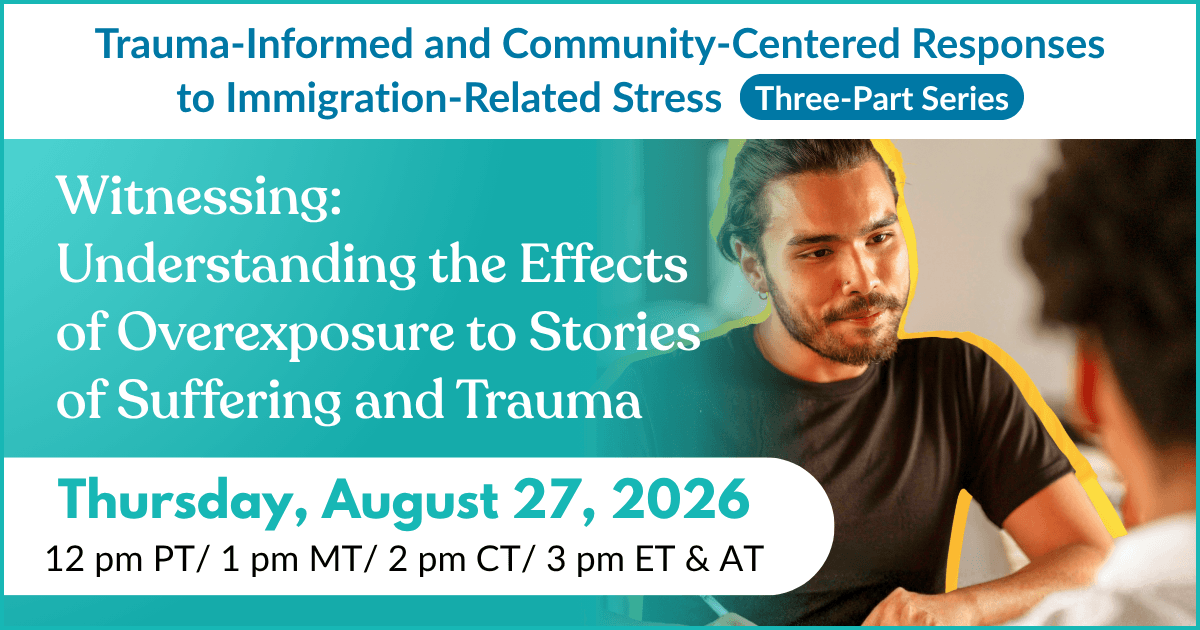
Clinicians and health care workers are caring for immigrant and migrant communities in a time of increased fear, uncertainty, and stress. This three-part webinar series will offer trauma-informed, culturally responsive, and community-centered approaches to supporting patients, families, and the workforce that serves them. Sessions will focus on trauma-informed care in the current immigration climate, best practices for community-based participatory campaigns, and the Witnessing model for sustaining compassion, reflection, and collective care.
THIS THREE-PART SERIES is the result of requests from our clinical network and community partners for additional support in trauma-informed care, including our 2025 survey with Physicians for Human Rights, post-webinar session evaluations, and MCN office hours. MCN is dedicated to being responsive to your emerging concerns. Email contedu@migrantclinician.org to provide your feedback and suggestions.
| COST: No cost to sign up! Our webinars are made possible by the generosity of individual donors. If you’re able, please consider supporting this educational programming. Click here to donate. Suggested donation of $5-100. |
Sessions
SESSION 3: Witnessing: Understanding the Effects of Overexposure to Stories of Suffering and Trauma
August 27, 2026
Clinicians and health care workers may be exposed to difficult stories and situations when supporting immigrant and migrant patients and families. This distress may come from what patients share, what workers observe directly, or the limits they face when trying to help within systems shaped by immigration-related fear, family separation, legal uncertainty, and unequal access to care. This work can be especially challenging when providers feel they cannot change the conditions causing harm. Their own histories and lived experiences may also shape how they respond to what they witness. This session will introduce the Witnessing Model as a way to understand the causes of provider distress, recognize signs of stress and overwhelm, and identify practical ways to stay grounded, compassionate, and connected to reasonable hope in the current context of care.
Presenters
Pamela Secada-Sayles, EdD, MPH
Pamela is a Senior Program Manager for the Mental Health and Well-being team at Migrant Clinicians Network. She earned her Doctor of Education in Organizational Change and Leadership from the University of Southern California, her Master’s in Public Health from the University of California, Los Angeles, and her Bachelor’s in Anthropology and Chicana/o Studies from California State University, Fullerton. Her doctoral research focused on examining organizational and leadership practices that impacted employee well-being during the pandemic.

Jessica Calderón
Calderón joined MCN as an intern in January 2019, supporting the Ventanilla de Salud program. After graduating in May 2019, she worked with the International Projects and Emerging Issues team. Currently, she works as a program coordinator with the Witness to Witness program and the Ranch Stress Assistance Network (FRSAN-NE) Cultivemos initiative. Calderón earned her Bachelor’s in Psychology and Spanish and Latin American Literature from Texas State University and is pursuing a Master’s in Clinical Mental Health Counseling at St. Edward’s University. She focuses on working with individuals impacted by attachment disruption, family conflicts, and other conflicts.

At the conclusion of this series, participants will be able to…
- Describe trauma-informed and culturally responsive approaches to supporting immigrant and migrant patients, families, and care teams in the current immigration climate.
- Identify best practices for developing trauma-informed community-based participatory campaigns that reflect community priorities and build trust.
- Recognize signs of provider distress related to repeated exposure to trauma and apply the Witnessing model to support reflection, compassion, and collective care.