x

Resources By Category

MCN


DATE RECORDED: August 17, 2016 at 1 pm ET

PRESENTED BY: Amy Liebman, MPA, MA and Wilson Augustave, member of MCN’s Board of Directors and Senior HIV Case Manager at Finger Lakes Community Health


Continuing Education Credit

To receive CME* or CNE credit after viewing this webinar, you must:

  • Complete the Participant Evaluation associated with this webinar
  • Send an email with your first and last name stating which webinar you completed to contedu@migrantclinician.org
Description

Milton “Tito” Rafael Barreto Hernandez was 22 years old when he died. He was killed when he was pulled into a machine at the concrete crushing facility where he worked.  This work-related death could have been prevented and would likely never have happened had the right safety procedures been followed.  Low-wage workers like Tito often work in dangerous jobs and immigrants are more likely to die or get hurt at work.  In spite of dangers on the job, all workers have the right to a safe and healthy workplace. This training for community health workers will equip you with the knowledge you need to empower people to advocate for their rights on the job. Additionally, participants will come to understand how to seek help in case of a dangerous work environment and to be familiar with resources to assist workers.   

Learning Objectives
  1. Identify worker safety and health rights and responsibilities in the United States
    Describe the role of government agencies in protecting workers
    Recognize resources to assist workers in addressing workplace hazards
    Identify worker safety and health rights and responsibilities in the United States
  2. Describe the role of government agencies in protecting workers
  3. Recognize resources to assist workers in addressing workplace hazards
Further Reading

This material will be produced under grant number SH-27640-15-60-F-48-SH5 from the Occupational Safety and Health Administration, U.S. Department of Labor. It will not necessarily reflect the views or policies of the U.S. Department of Labor, nor does mention of trade names, commercial products, or organizations imply endorsement by the U.S. Government.
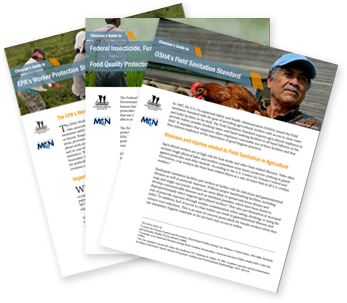
MCN Clinician Guides

MCN and Farmworker Justice offer these guides to assist clinicians in understanding farmworker health and safety regulations. OSHA’s Field Sanitation Standard; EPA's Federal Insecticide, Fungicide, and Rodenticide Act (FIFRA); EPA's  Food Quality Protection Act (FQPA); EPA’s Worker Protection Standard (WPS).

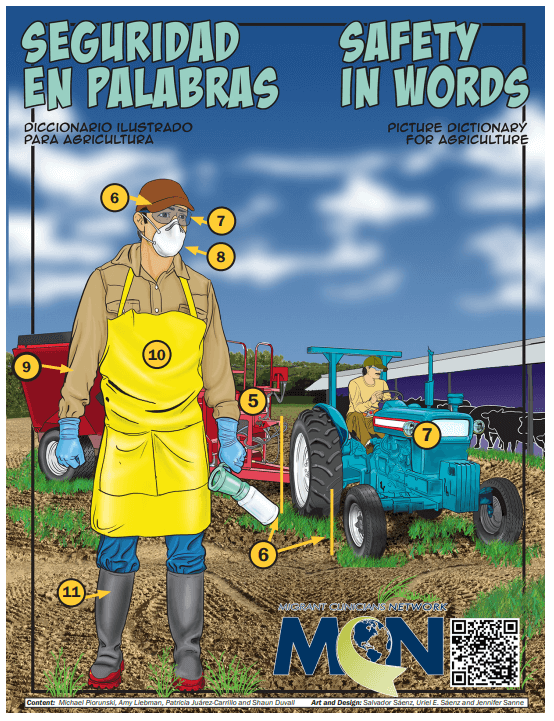
Safety in Words

Este diccionario ilustrado bilingüe de MCN, "Seguridad en Palabras/ Safety in Words", muestra los peligros que hay en el lugar de trabajo y las mejores prácticas para la salud y la seguridad en la agricultura. Desarrollado con el apoyo del Programa de Subvenciones Susan Harwood de OSHA, este recurso refuerza el vocabulario en inglés de los trabajadores que hablan español lo que ayudará a prevenir lesiones en la agricultura. 

Download Resource

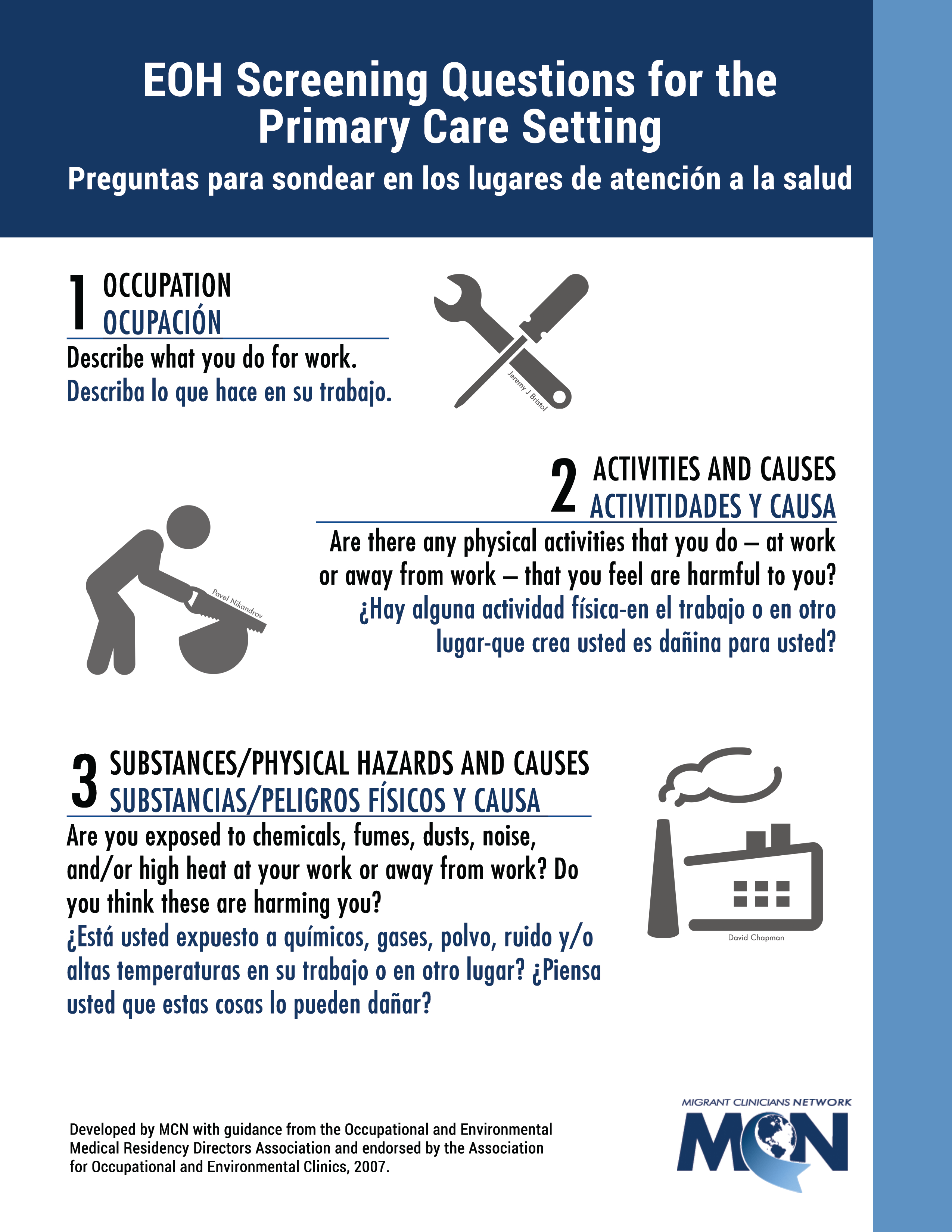
Three concise and effective environmental/occupational health screening questions for the primary care provider. English and Spanish. MCN, 2014.

An EHR-friendly version of these screening questions was developed through MCN's Workers & Health Program. This can be used as a reference for integration into the health center's Electronic Health Record. 

Download Resource

This colorful bilingual comic addresses workers' compensation and immigrant dairy farm workers’ rights and responsibilities. It tells the story of a Mexican dairy farm worker who is injured on the job and the steps he and his employer take to make sure he receives his benefits, and the farm improves its safety. 

Haz-Map® is an occupational health database designed for health and safety professionals and for consumers seeking information about the adverse effects of workplace exposures to chemical and biological agents. The main links in Haz-Map are between chemicals and occupational diseases. These links have been established using current scientific evidence.

¡Cuídate! is an educational resource on the prevention of musculoskeletal injuries at work. This comic is in Spanish, English and Haitian Creole.

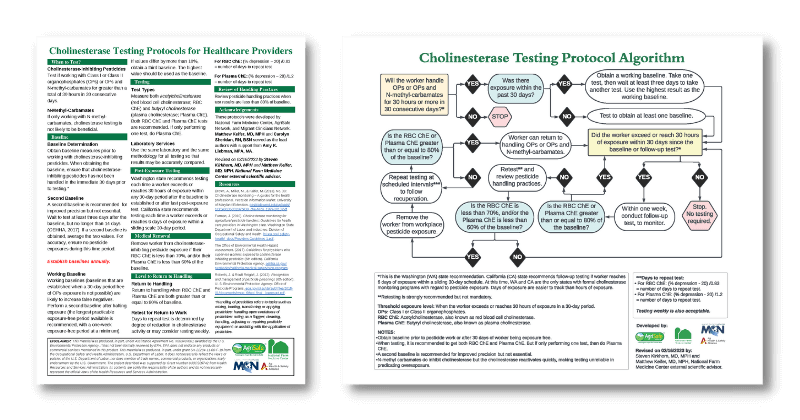
Cholinesterase (ChE) Testing Protocols and Algorithm    

These Cholinesterase (ChE) clinical tools provide a concise and simple format to guide clinicians in monitoring the ChE levels for patients working with Class I and Class II organophosphates (OP) or OP and N-methyl-carbamates. 

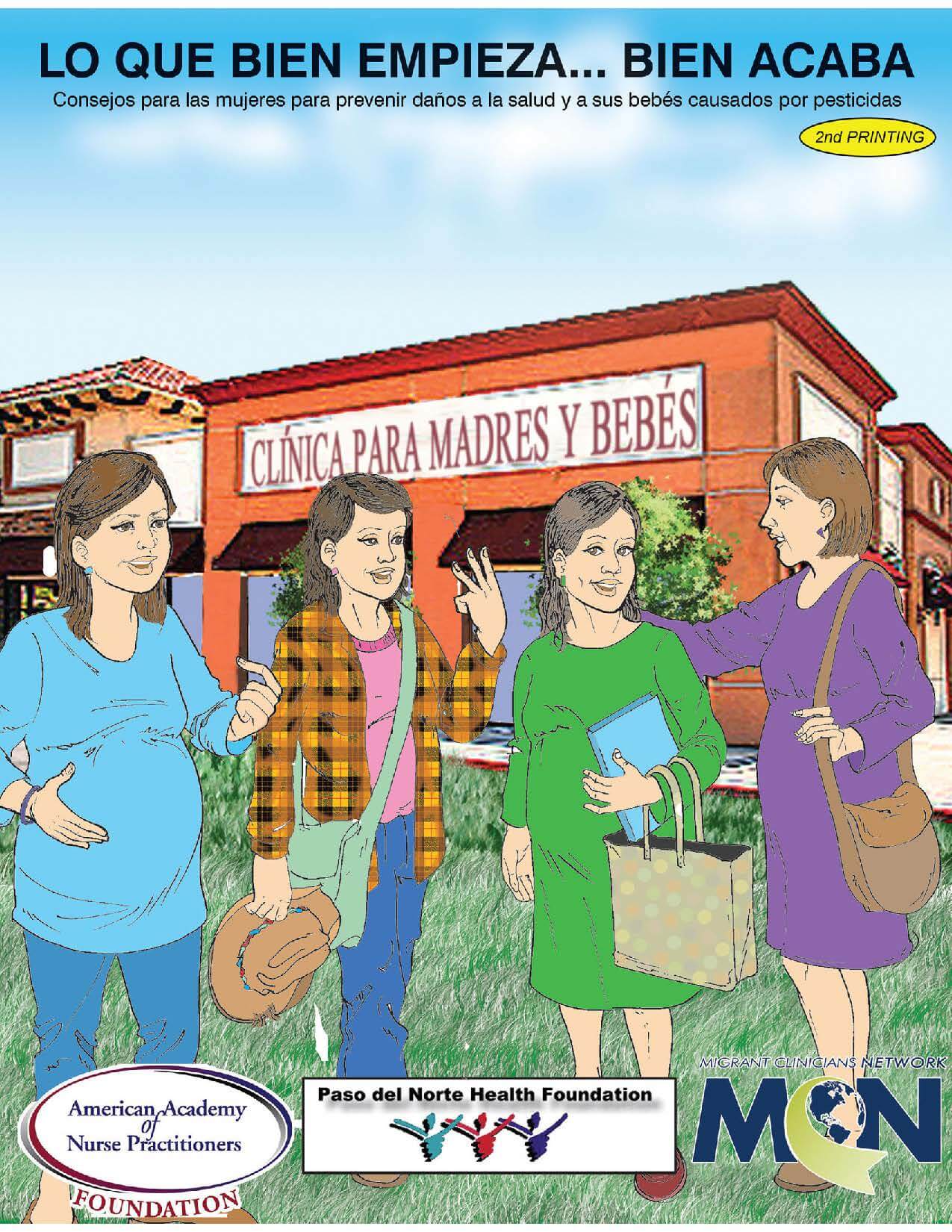
Lo Que Bien Empieza

MCN Spanish educational comic book that addresses pesticide exposure in women of reproductive age. LO QUE BIEN EMPIEZA...BIEN ACABA: Consejos para las mujeres para prevenir daños a la salud y a sus bebés causados por pesticidas.

Download Resource

Three printable brochures on Asthma, Lead and Pesticides produced by Farmworker Justice. 

Download Resource


MCN's Pesticide Clinical Guidelines and Pesticide Exposure Assessment Form assist in the recognition and management of acute pesticide exposures in primary care settings.

The pesticide guidelines were adapted from guidelines developed by Dr. Dennis H. Penzell, a former medical director of a Community and Migrant Health Center with experience in large-scale pesticide exposure incidents.

The Acute Pesticide Exposure Form was adapted from the data collection on an acute pesticide exposed patient tool developed by Matthew C. Keifer, MD, MPH, Director of the National Farm Medicine Center, appearing in the EPA's Recognition and Management of Pesticide Exposures, 6th Edition, EPA 2013.

These resources were developed with guidance from MCN's Environmental and Occupational Health Advisory Committee - a panel of healthcare professionals and researchers with expertise in pesticides and migrant health.

The Toolkit is a combination of easy-to-use reference guides for health providers and user friendly health education materials on preventing exposures to toxic chemicals and other substances that affect infant and child health.

Educational comic book about the sources of indoor pollution and ways to minimize exposure. Offers safe alternatives to clean homes. English and Spanish.

Outlines the knowledge and skills that health professionals need to have about pesticides. This document is part of a national initiative aimed at ensuring that pesticides issues become integral elements of education and practice of primary care providers. English and Spanish

American Association of Poison Control Centers Offers a listing of regional Poison Control Centers. Poison Control Centers provide information regarding possible or actual environmental or occupational exposures and recommended treatments. The website offers education for children and adults.


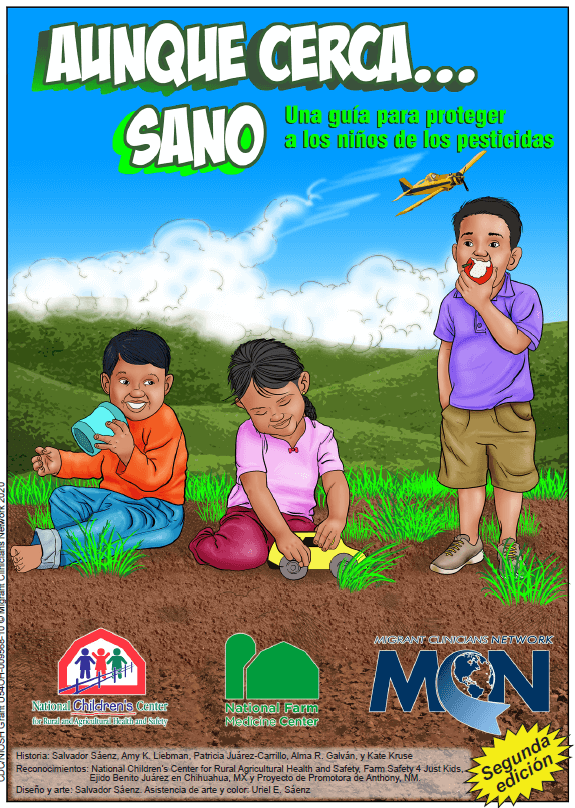
This pesticide comic book targets migrant and seasonal farmworker families to educate parents about children's risks to pesticide exposure and ways to minimize these risks. The latest edition is currently only available Spanish though we are working on releasing an updated version of the comic in English.

We are currently "sold out" of our printed pesticide comic book. We are looking for additional funding. In the meantime, please download an e-copy.

A Spanish language trifold with pesticide safety information.

Download Resource

A Spanish language comic books that explains the dangers of pesticides and offers practical, less toxic approaches to pest control. Produced by the Center for Environmental Resource Management at UTEP.

The manual is a guide that can be used by community workers, educators, and health promoters for their educational activities in the community. It provides information on the risks of exposure to environmental contaminants and pesticides and ways to reduce those risks. It also includes useful information and tips for working in the community. 

As for the comic book, community workers, educators and health promoters can use it as an educational tool to inform their community about the risks of environmental contaminants and pesticides. 

Pesticide and Pregnancy Handout, English and Spanish, from the Wake Forest University School of Medicine.