Weather-related Emergencies and Disaster Management - Information Hub
.png)
MCN continually develops and promotes strategies and resources on weather-related emergencies and disaster management, like hurricanes, floods, wildfires and others, to support health centers, health departments, community groups, and clinicians as they reach out to communities that are often overlooked and give care to patients who might otherwise have nowhere to go. The following resources are part of a project implemented in Puerto Rico and the US Virgin Islands in which MCN created modules contained in a comprehensive curriculum related to weather-related emergencies and disaster management. Below, you will be able to access each module and the paired resources from MCN, governmental agencies, non-governmental organizations, and community-based organizations. Many of the resources are focused on the vulnerable populations that already encounter numerous barriers to health and to care.
Please choose from the modules below for more information and to see or download recommended resources.
.png)
.png)
.png)
.png)
.png)
.png)
MCN has been at the forefront of addressing weather-related health impacts on the communities we serve since establishing our Puerto Rico office in 2018. We employ a participatory approach, the community mobilization model, that empowers communities to identify their own weather-related challenges and develop locally-driven solutions. This model, successfully used in emergency management contexts, combines proven public health strategies with community wisdom.
We also recognize that Community Health Centers (CHCs) serve as critical lifelines in rural areas, providing not just medical care but serving as trusted community anchors during disasters.
Our work focuses on building capacity among CHCs to:
- Identify weather-related health hazards affecting agricultural workers
- Develop emergency preparedness strategies that are relevant to the communities served
- Facilitate access to resources that enable adaptation
- Strengthen community mobilization for long-term adaptation and connection
Find out more about our weather-related events and phenomena related work:
.png)
This module provides an introduction to the science behind weather-related extreme events and phenomena considering their global and local impacts. It contains resources and tools to understand, identify, and apply data and information on weather-related extreme phenomena or events and their impacts. Anyone interested in understanding the definitions and application of the concepts "weather", "variability", "weather-related extreme phenomena" and "weather-related extreme events". Also, if you are interested in explaining the overall impacts associated to weather-related extreme events and phenomena that are being felt in PR and USVI, as well as indicators of those impacts and future projections.
Top recommended resources
|
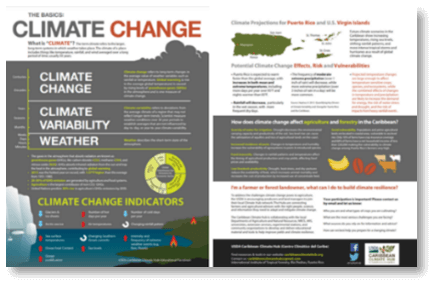
This fact sheet summarizes the basic fundamentals related to the science of extreme weather-related phenomena. You can use this sheet in outreach activities or include it as part of the educational materials you provide to patients. |
|
Coloring book - Sr. Sapo’s GardenThis coloring book highlights important information regarding extreme weather-related phenomena and agriculture. Kids using this coloring book will have the opportunity to grasp key topics that link food production and extreme weather-related phenomena. |

.png)
This module explores how weather-related extreme events and phenomena affect agriculture and livestock, offering adaptation strategies. It contains resources and tools to understand agricultural practices in Puerto Rico and to identify and apply strategies for adaptation and mitigation of the impacts of extreme weather-related phenomena and events on such practices. Learn to understand the general characteristics of Puerto Rico's agriculture and the definitions and application of "weatheradaptation" and "adaptive capacity." If you are interested in being able to describe a variety of resources that can help identify and provide information on extreme phenomena and events related to weather and adaptation, this module is for you!
Top recommended resources
|
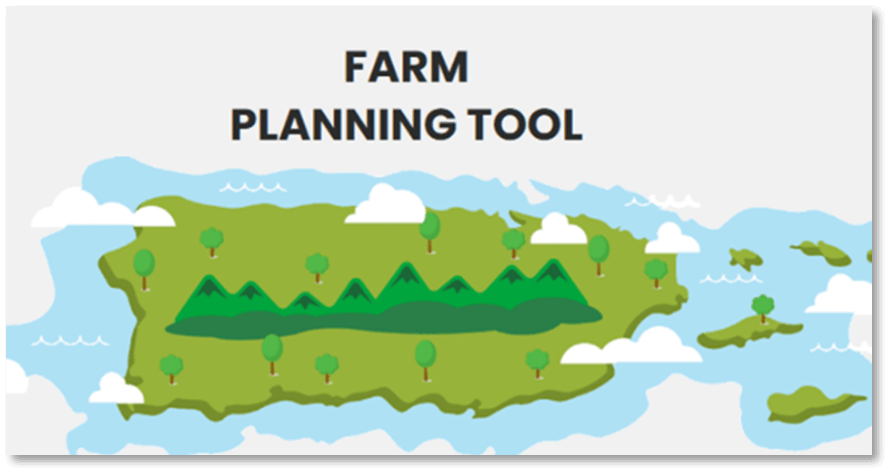
Farm Planning ToolIt is a digital tool developed by the USDA Caribbean Climate Hub that provides the characteristics of any area in PR and USVI. Included with the resources package for this Module is a fact sheet about the tool, which also provides instructions on how to use it. The online tool generates information on the projected impacts of extreme weather-related phenomena (temperature and precipitation), landslide susceptibility, and other environmental and physical aspects relevant to agriculture. This data can help people to have a clearer idea of the characteristics of their farm and its surroundings. Clinicians can use this tool in several ways. One way is to analyze an area or zone before visiting it. If, for example, an outreach event (e.g., health fair) is to be held in neighborhood X, the tool can be used to learn about the environmental, physical, and climatic aspects, among others, of that neighborhood. Similarly, clinicians can share the tool with farmers and show them how to use it. It can support them in getting more information about their farms. This tool is also used as part of the activities in the next resource. |
|
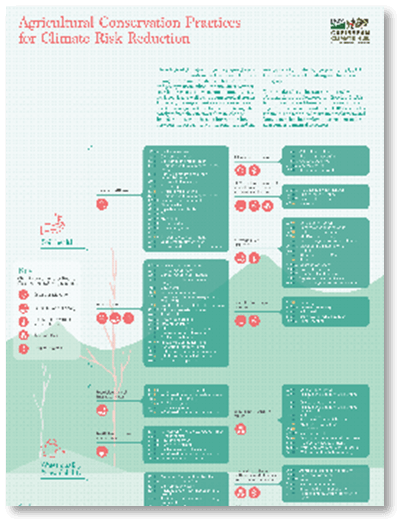
Agricultural Conservation Practices Summary SheetThe USDA Natural Resource Conservation Service (NRCS) provides technical support, grants and incentives for the adoption of agricultural or conservation practices on farms and private lands that support farmers to adapt to and mitigate extreme weather-related phenomena impacts. The following resource on NRCS-supported practices can help you learn about them and support the process of applying for services or support. |
.png)
This module offers guidance for outreach workers to assist community members in organizing and mobilizing resources to prepare for and respond to emergencies and disasters. It contains resources to understand and apply emergency management principles within the community mobilization framework. Tools to strengthen community members' capacity to prepare for, mitigate, and respond to extreme weather-related events. Learn to understand the phases of emergency management and the definitions and applications of the concepts of "threat," "emergency," "disaster," and "vulnerability." Also, those who wish to apply community preparedness tools with the understanding of the importance of community mobilization to mitigate the effects of extreme weather-related events and adapt to extreme weather-related phenomena.
Top recommended resources
|
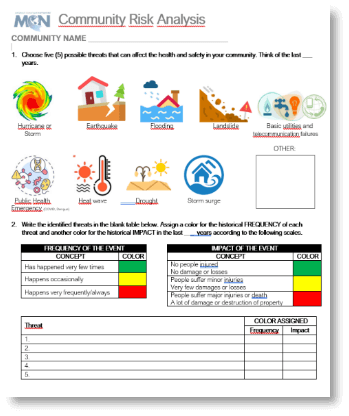
Community Risk AnalysisIt is a valuable tool for reflecting on emergency events or disasters that have occurred in the community. By assessing the frequency and impact of these events, we can create a prioritized list of risks to determine which events pose the greatest threat and focus our community preparedness efforts accordingly. |
|
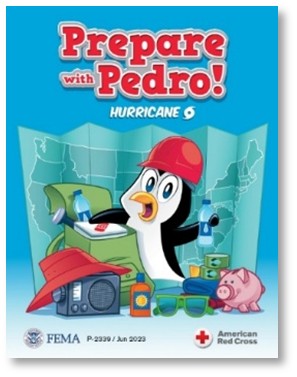
Get Ready with PedroA 30- to 45-minute educational preparedness program for grades K-2 (7 years) that teaches young students how to be prepared and act in the face of a variety of home emergencies or local hazards. |
.png)
This module addresses health risks in communities caused by weather-related extreme events or phenomena by considering physical, chemical, and biological risks. It contains information, resources, and tools to understand and identify common health hazards in farming communities, which become especially important risks during extreme weather events. Learn how extreme weather events, often intensified by extreme weather-related phenomena, affect community health and in being able to identify chemical and biological risks. In this module, mental health, chronic diseases, infectious diseases will be discussed in the context of extreme weather events. Tools and resources will be presented to educate about extreme weather events, emergency management, risk mitigation strategies, and protecting community health and safety.
Top recommended resources
|
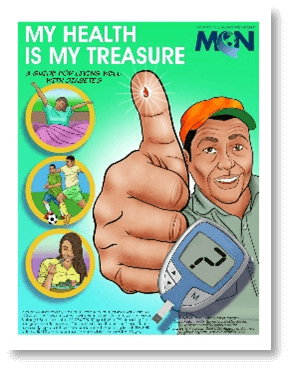
My Health is My TreasureThis comic book explores the subject through the story of a farmworker named Goyo, who was recently diagnosed with diabetes. |
|
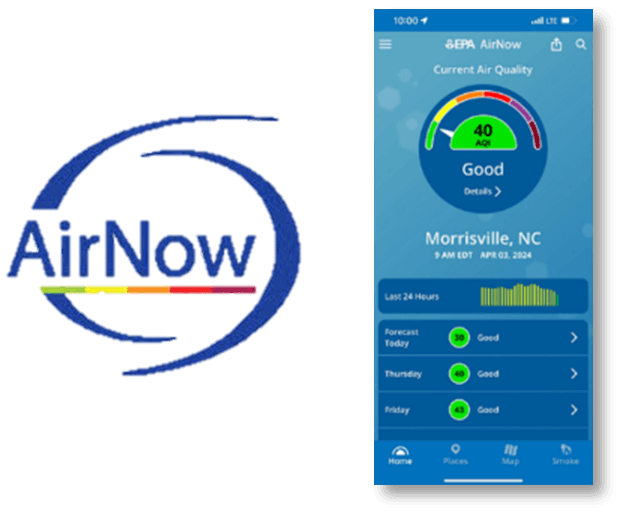
EPA's AirNow Mobile AppIt offers a simple interface to quickly view current and forecasted air quality information, allowing you to plan daily activities and protect your health. The app automatically displays the current air quality index (AQI) for your local area or any area you want to check and allows you to store multiple areas for quick reference. |
|
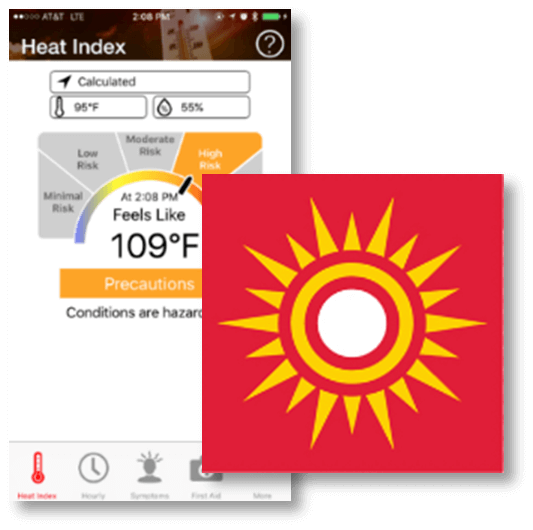
OSHA-NIOSH Heat Safety Tool ApplicationIt calculates the heat index of the place and shows the level of danger. With a "click," you can receive reminders about the appropriate protective measures for that level of risk and protect yourself from heat-related illnesses. The app includes reminders about hydration, rest, and offers valuable information on signs and symptoms of heat-related illnesses. |
|
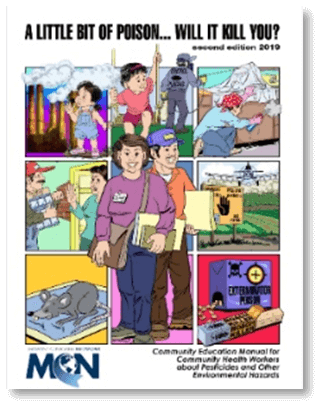
A Little Bit of Poison… Will It Kill You?A guide that can be used by community workers, educators, and community health workers during their educational activities in the community. It provides information on the risks of exposure to environmental pollutants and pesticides and ways to reduce those risks. It also includes helpful information and tips for working in the community. As for the comic book, community workers, educators, and health promoters can use it as an educational tool to inform their community about the risks of environmental pollutants and pesticides. |
.png)
This module focuses on protecting the health and safety of farmworkers in extreme weather and changing environmental conditions. It includes information about specific occupational hazards, such as heat stress and heat-related illnesses, as well as how to prevent them. It also covers safety in agricultural environments where workers are exposed to chemicals such as pesticides, and how extreme weather conditions can increase these risks. The module offers practical resources on how to manage these hazards and protect the health and well-being of workers during disasters and extreme heat conditions. Anyone who provides services or works in outdoor environments, especially in sectors such as agriculture, construction or emergency services, where workers face extreme weather conditions might be interested in this module. It is particularly relevant for those who respond to disasters or work in the sun in areas with high temperatures. In addition, it should be read by occupational safety managers, occupational health workers, worksite supervisors, and community educators seeking to promote occupational safety and health, specifically in the face of risks associated with extreme heat and chemical exposure.
Top recommended resources
|
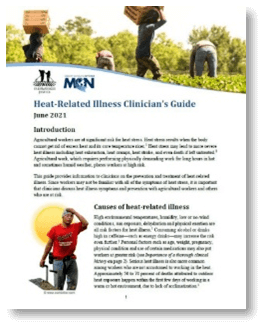
Heat-Related Illness Clinicians GuideProvides clinical information on the prevention and treatment of heat-related illness. Since workers may not be familiar with the signs of heat stress, it is important for clinicians to discuss symptoms and prevention with farmworkers and others at risk for heat-related illness. |
|
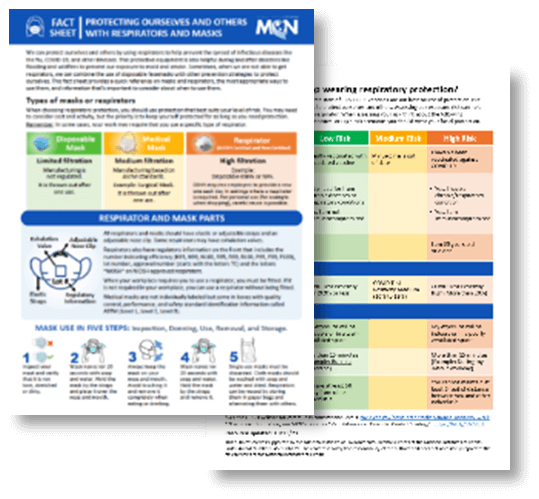
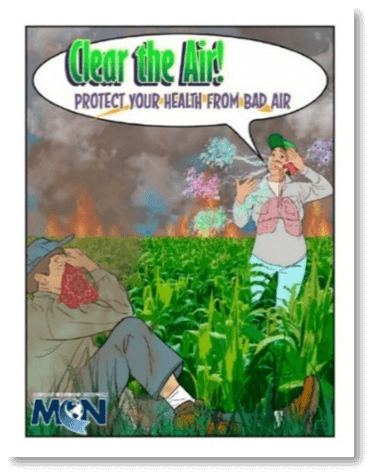
Clear the Air! Protect Your Health from Bad AirThis comic serves as a support for health promoters by conveying basic information about respiratory health and air pollution. It includes basics about the respiratory system, particulate matter, the Air Quality Index, sources of air pollution, and the personal protective equipment that outdoor workers should wear to protect themselves from respiratory illnesses. |
|
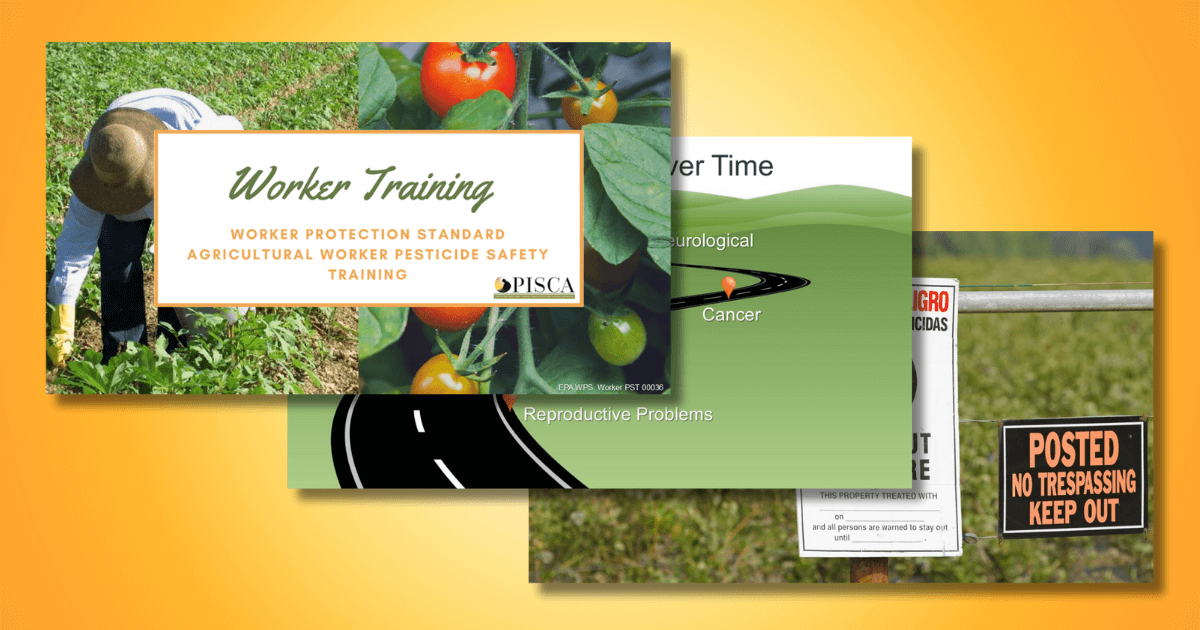
Pesticide Safety CurriculumA package containing an illustrated poster, presentation, and detailed facilitator guide with engaging visuals and plain language, useful for educating farmworkers and members of agricultural communities about pesticide safety practices. |
|
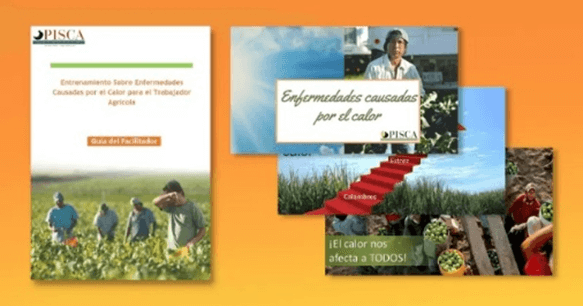
Heat-Related Illness CurriculumA package containing an illustrated poster, presentation, and detailed facilitator guide with engaging visuals and plain language, useful for educating farmworkers and members of agricultural communities about heat-related illness. |
.png)
This module provides information on how to assist in the development of leadership and advocacy skills to empower community members to advocate for weather adaptation and raise awareness within their communities. It contains practical exercises focused on observation, questioning, and empathetic listening, and will provide the reader with tools that facilitate a deep understanding of community dynamics. All community outreach facilitators, community leaders, and individuals involved in community advocacy might be interested in this module. It is especially beneficial for those looking to improve their ability to engage with and understand their communities, as well as strengthen their leadership skills.
Top recommended resources
|
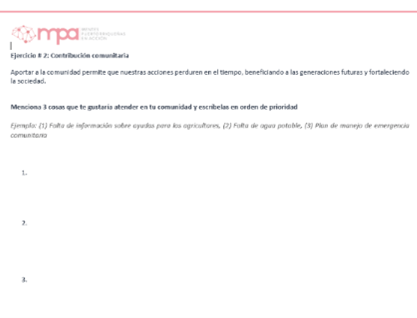
Leadership ExerciseAfter carrying out the self-analysis where we contemplate who we are as a person and what are the values that define us individually, we move to identify what we can contribute to the community. This tool includes a practical exercise that will help to determine this possible community contribution. |
|
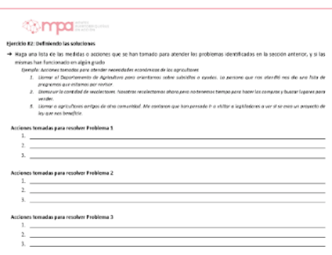
Advocacy ExerciseAn exercise that allows you to make a list of the measures or actions that have been taken to address the problems identified, evaluate if they have worked, identify the people who have been involved, list possible solutions and specific actions to reach the solutions. |
.png)
This module offers resources and tools to understand and identify strategies to capture community processes while promoting the impact of community outreach; that is, developing and promoting activities, materials and strategies that are aligned with the community to be impacted. It contains resources and tools to understand and identify strategies for grasping community processes while promoting the impact of community outreach; that is, developing and promoting activities, materials, and strategies that align with the community to be impacted. Anyone who wishes to create and implement activities focused on community participation and presents strategies to adapt Community Outreach efforts to maximize their impact should read this module.