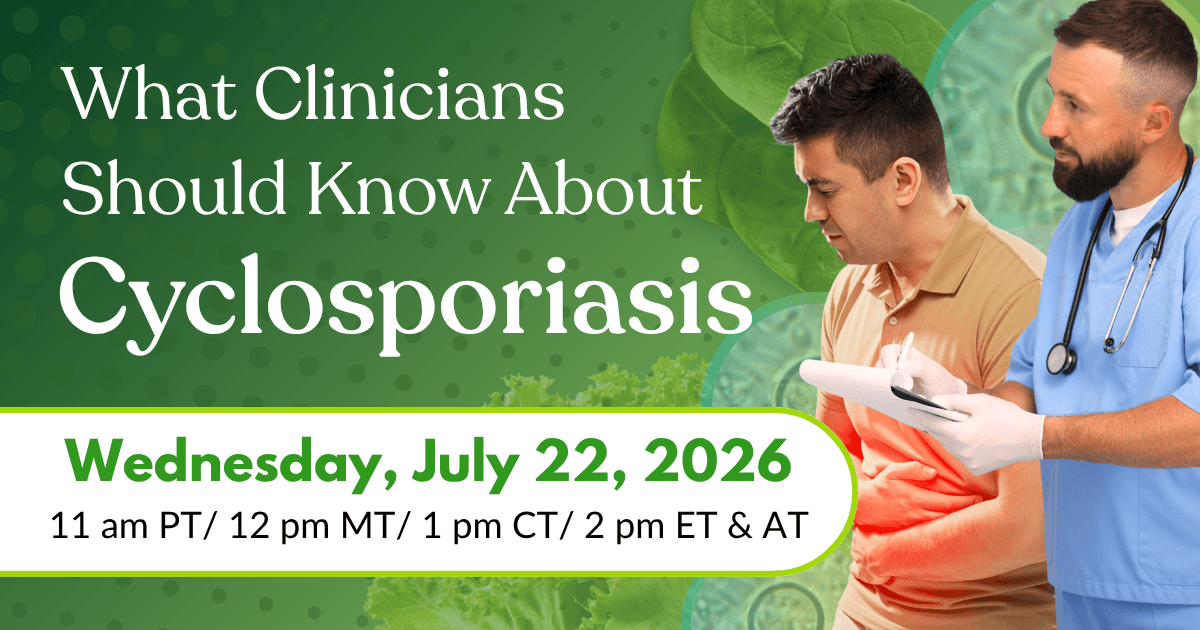
Cyclosporiasis, a diarrheal illness caused by the parasite Cyclospora cayetanensis, is relatively uncommon in many communities. However, the current and rapidly expanding outbreak is increasing the likelihood that patients will seek care at community health centers, where many clinicians may have limited experience diagnosing and treating this infection. Adding to the challenge, not all laboratories have the capability to test for Cyclospora.
This webinar will equip health care providers with the knowledge and practical tools needed to respond effectively. Our expert panel will discuss how to distinguish cyclosporiasis from other causes of diarrhea, identify appropriate diagnostic testing, and navigate situations in which additional support from state or local health departments may be needed to obtain laboratory confirmation.
Participants will also learn how to prepare patients for public health outbreak investigations, including health department interviews, and how to communicate public health recommendations. The session will cover work restrictions that may apply to infected individuals employed in food harvesting, food packaging, food preparation, or restaurant settings. Strategies will take into account the various factors that migrant and immigrant workers encounter that may act as barriers to seeking and receiving health care, and participants will learn ways to help migrant and immigrant patients understand and comply with these requirements.
| COST: No cost to sign up; pay what you can! This webinar is supported entirely by individual donors like you. Click here to donate. Suggested donation of $5-100. |

At the conclusion of the presentation, participants will be able to:
- Improve knowledge about the current cyclosporiasis outbreak and what distinguishes cyclosporiasis from other diarrheal illnesses.
- Describe how health centers can collaborate with state and local health departments.
- Recognize risks and barriers for migrant, immigrant, seasonal agricultural and food-services workers may face during this outbreak.
- Provide prevention messaging recommendations while the food source has not yet been confirmed.
Presenters

Dr. Natasha Bagdasarian is the Chief Medical Executive for the State of Michigan. She is board certified by the American Board of Internal Medicine in Internal Medicine and Infectious Diseases, and she is a Fellow of the Infectious Diseases Society of America and the American College of Physicians.
Dr. Bagdasarian completed medical school at Wayne State University; internal medicine residency and infectious diseases fellowship at the University of Michigan; and she received a Master of Public Health (MPH) degree, from the University of Michigan School of Public Health. She serves as adjunct faculty at the University of Michigan School of Public Health.
Dr. Bagdasarian is a member of Governor Gretchen Whitmer’s Cabinet. She chairs Michigan’s Public Health Advisory Council, Gun Violence Prevention Task Force, and Opioid Task Force.

Renai Edwards began her career as a Peace Corp volunteer in Honduras, which led her to public health. She worked at local, state, national, and international government agencies for over 20 years and now serves as the Director of Training & Technical Assistance at Migrant Clinicians Network. Renai’s focus has been on infectious disease (HIV/STI/TB) prevention, control, and surveillance, and clinician and community training. She is bilingual (English/Spanish), holds a Master's of Public Health degree and Bachelor of Arts degrees in Anthropology and Hispanic Studies.