Mairinete López Santiago holds a master’s in public health from the University of Puerto Rico. She is a Chemical Technologist and Environmental Health Specialist with an interest in contributing to environmental and community well-being through scientific research and environmental education.
Extreme weather represents a growing threat to agriculture and food security globally. In regions such as Puerto Rico, severe impacts on the agricultural sector have been documented due to extreme weather phenomena such as droughts, hurricanes, heavy rain, and extreme heat events.1 These events have led to major crop losses, harmed agricultural workers’ health, and reduced farms' capacity to produce food. For example, after Hurricane Maria in 2017, estimates showed that Puerto Rico lost more than 80% of local agricultural production,2 increasing the island’s dependence on food imports. These impacts not only harm agricultural workers, but the entire community, as they compromise access, availability, and affordability of food. Given these outcomes, it is urgent to educate and empower rural communities, so they understand how extreme weather affects the agrifood system and what actions they can take to adapt and protect it.
Module 2 of the curriculum presents tools to mitigate the effects of extreme weather events on agriculture, including crop and soil damage, effects on agricultural worker health, and threats to community food security. This module aims to strengthen the agricultural system by protecting not only farmland and crops, but also those who work the land day after day. To reach the agricultural workers who put food on our table every day, we partnered with MEDX, a community health center with 14 clinics across western Puerto Rico.
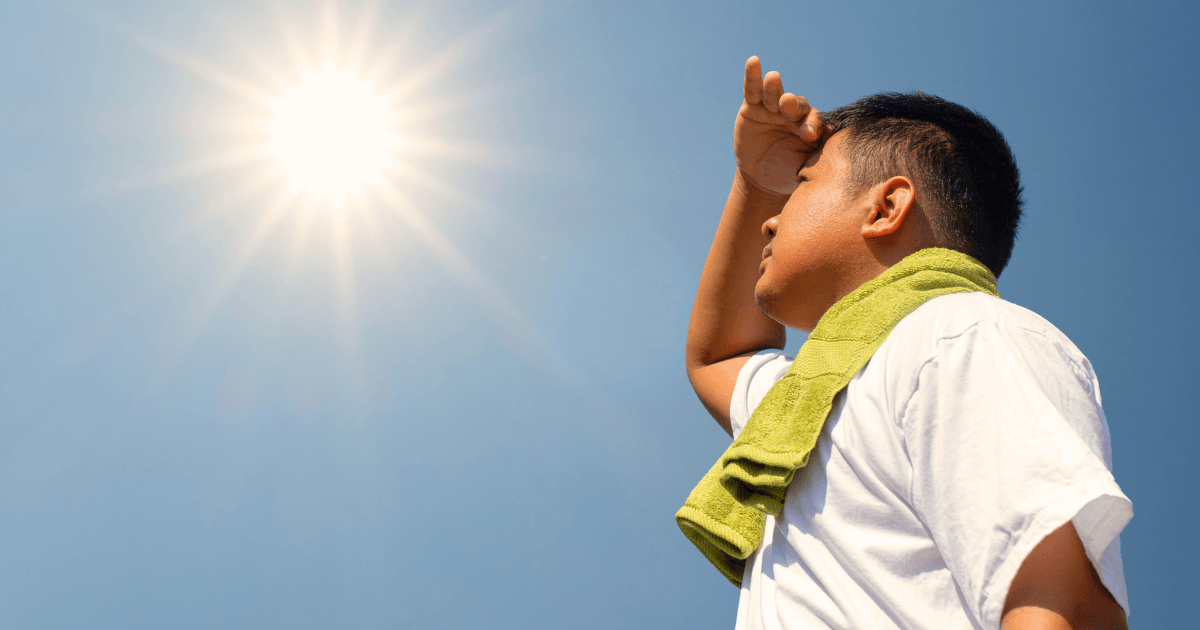
In this story, heat is the protagonist; although it cannot be seen, it can be felt every day. In June, MEDX invited us to a community health fair at a church in Barrio Salinas de Lajas, Puerto Rico, a scenic coastal community in the southwest part of Puerto Rico. The population is mostly composed of older adults, many of whom live with chronic conditions and have limited awareness of the risks associated with extreme heat. That morning, the temperature rose above 90°F, and the dry air made the heat feel even more intense. And, as MEDX staff had warned, community participation in group activities is low, and community members were not showing high engagement in our efforts.
We began the activity with one-on-one meetings, asking participants what they knew about extreme heat and how they protected themselves. We then provided an educational talk on extreme heat and what practices can help minimize its effects. As expected, the group was hesitant to participate in the group discussion. Far from being discouraged, we adapted: we spoke in a friendly, one-on-one manner and used handouts with large print, bright colors, and examples from everyday life. For example, we explained that drinking water frequently, seeking shade, wearing light clothing, and resting during the hottest hours of the day can make a big difference, especially for older adults or people with chronic health conditions.
During the one-on-one meetings, some people shared their experiences. One woman commented that, on very hot days, she feels she cannot even go out in her yard. The heat was no longer just a nuisance. It became a real threat. After the activity, we observed small but significant changes - some people began to seek shade, and talk to each other about the heat. We raised awareness in the community. The seed we planted is in the ground.
One of the central challenges was the community’s limited identification with agriculture, even as agricultural systems continued to shape local environmental and health conditions. Although community members do not see themselves as agricultural workers, they are still participants in the agri-food system, as gardeners, and as consumers of local farm products. We are all part of the agri-food system: those who grow, those who sell, those who cook, and those who consume. Eventually, recognizing extreme weather impacts on agriculture was key to helping this community see how it affects them directly.
This experience taught us that even when resources are limited, thoughtful, tailored interventions that are specific to the population and grounded in community knowledge can have a meaningful impact. Through this activity, the community learned how to protect themselves from extreme heat, understood how this phenomenon affects both agriculture and their whole community, and recognized the value of those who grow our food. There is still a lot of work to do, and every step counts. Protecting agricultural workers also protects our health, our families, and our food.