[Editor’s Note: This article has been updated and edited from its initial publication on Migrant Clinicians Network’s Substack, On the Move with MCN. Be sure to subscribe to MCN’s Substack to receive articles in your email inbox: https://migrantcliniciansnetwork.substack.com.]
Imagine this.
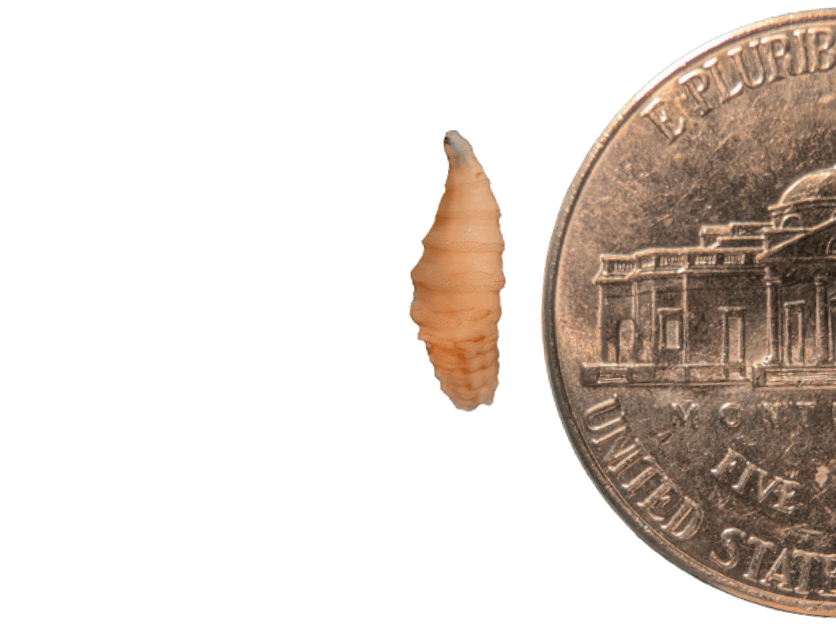
You're a nurse practitioner working in a Federally Qualified Health Center on the outskirts of San Antonio, Texas. Your first patient on a hot Tuesday morning is a 25-year-old male who works with livestock. He is complaining of a painful wound on his lower left leg. He has no underlying health conditions but does recall sustaining a minor injury in the same location while working a few weeks ago. When you examine it, the wound looks like a deep pocket in his skin and when you grab a flashlight to look inside the pocket, you see something moving around at the base of the wound. When you get closer to the wound, you notice a foul smell and see several tiny cream-colored maggots inside. Although you've never seen it before, you immediately suspect myiasis or an infestation caused by New World screwworm (NWS) based on his occupation and the physical presentation. After the larvae are surgically removed, laboratory testing confirms your suspicion.
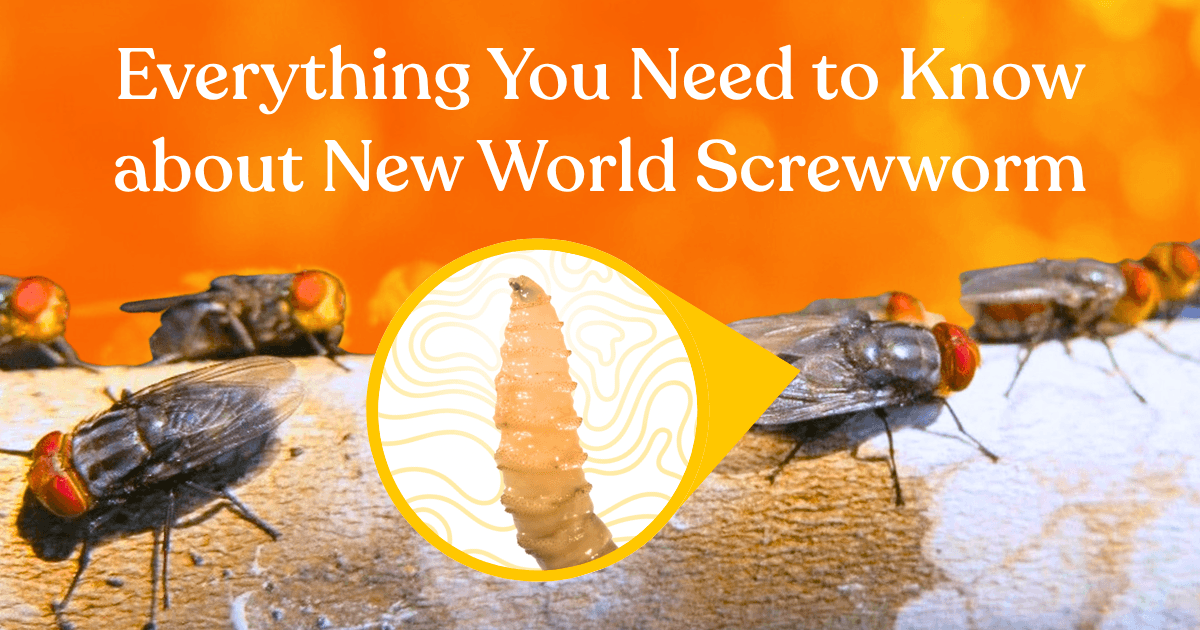
What is New World screwworm (NWS)?
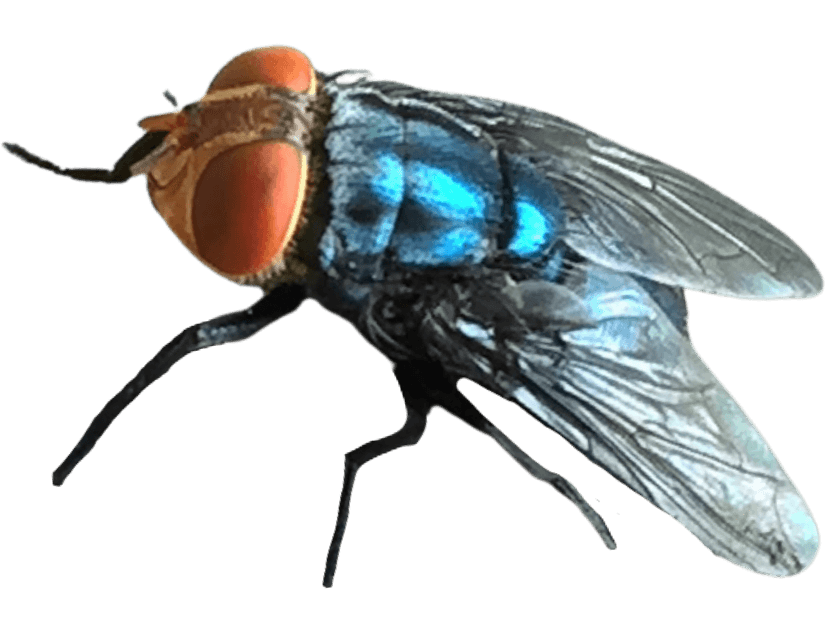
NWS (Cochliomyia hominivorax) is a parasitic fly that lays its eggs in open wounds or in other body cavities with mucus membranes, such as the nose, ears, eyes, or mouth.1 The eggs develop into parasitic larvae, more commonly known as maggots, that burrow (screw) into and feed on live tissue, such as skin, muscles, and organs. The larvae are very destructive, causing extensive tissue damage. Severe infestations, while rare, can be fatal. NWS primarily affects livestock, but the parasitic larvae can infest any warm-blooded animals, including humans. When NWS flies were present in the United States, they caused hundreds of millions of dollars in losses for the livestock industry annually.1
Why have I never heard of NWS before?
The NWS fly was eradicated from the United States in 1966 using a biological control technique (sterilized insects) developed by the USDA's Agricultural Research Service.1,3 Through a cooperative binational program, the Panama-United States Commission for the Eradication and Prevention of Screwworm (COPEG) eradicated New World screwworm flies from Mexico to Panama by 2006 and subsequently maintained a permanent sterile fly barrier along the Panama-Colombia border until re detection of NWS in 2022.3 The NWS fly has remained endemic in South America, Cuba, Haiti, and the Dominican Republic.
Why is it important to learn about now?
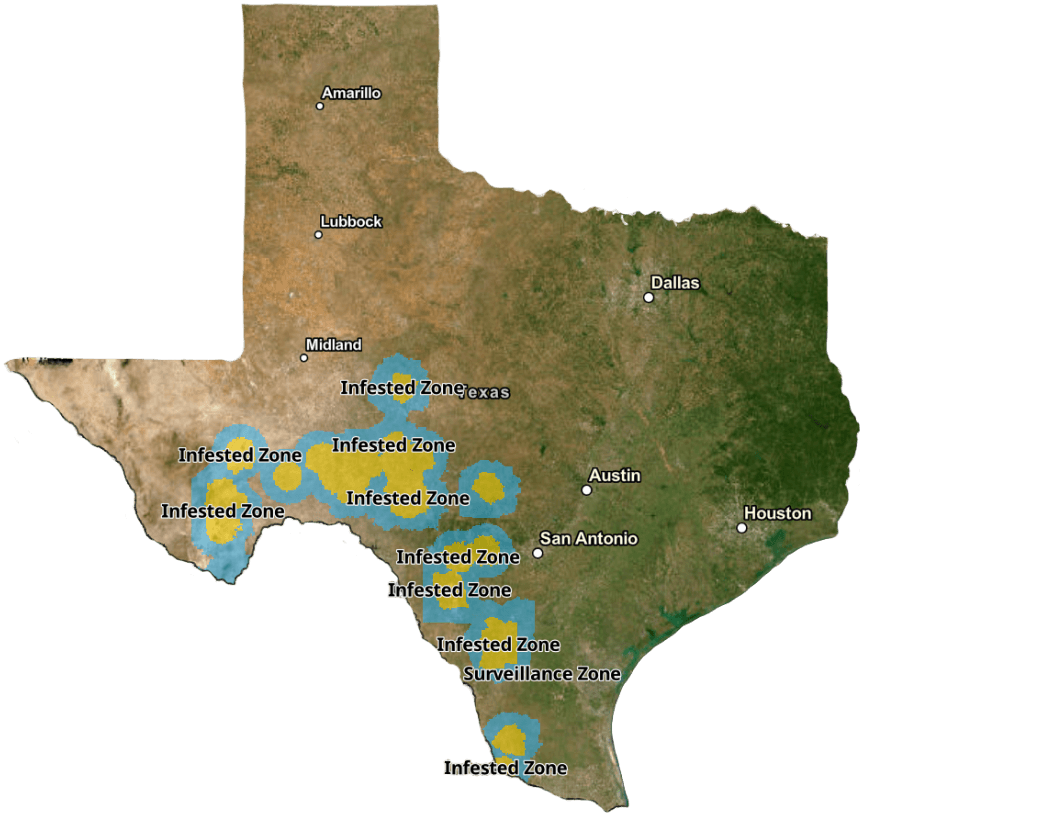
In August of 2022, NWS infestations were detected in animals in Panama.2 In 2023, NWS detections in Panama increased to 6,500 cases in one year. Since then, NWS has reemerged in every country in Central America and Mexico affecting both animals and humans, which prompted countries in the region to declare an outbreak.4 By early July 2026, there have been more than 185,000 NWS cases in animals and 2,263 cases in humans in countries in Central America and Mexico. In early June, NWS was detected in livestock and dogs in Texas and New Mexico for the first time since eradication. As of publication, cases continue to be detected in Texas. Due to this ongoing outbreak, anyone who has recently lived in or visited these areas could be affected. Since the re-emergence, there has been one confirmed case of NWS in a person who returned to the United States after traveling to El Salvador.4
Why is this happening now?
One Health is a concept that recognizes the intertwined health of humans, animals, and the environment. Extreme weather fluctuations due to human-induced weather pattern shifts help spread species from tropical regions north. Freezing temperatures used to suppress NWS existence in the north, but warmer temperatures over extended spring and autumn along with warmer winters expands the stretch of habitat northward into the United.5,6 Seasonal monsoon winds that had an early start in the US southwest may have helped arrival of NWS to the region and may increase spread over the course of the monsoon season.6
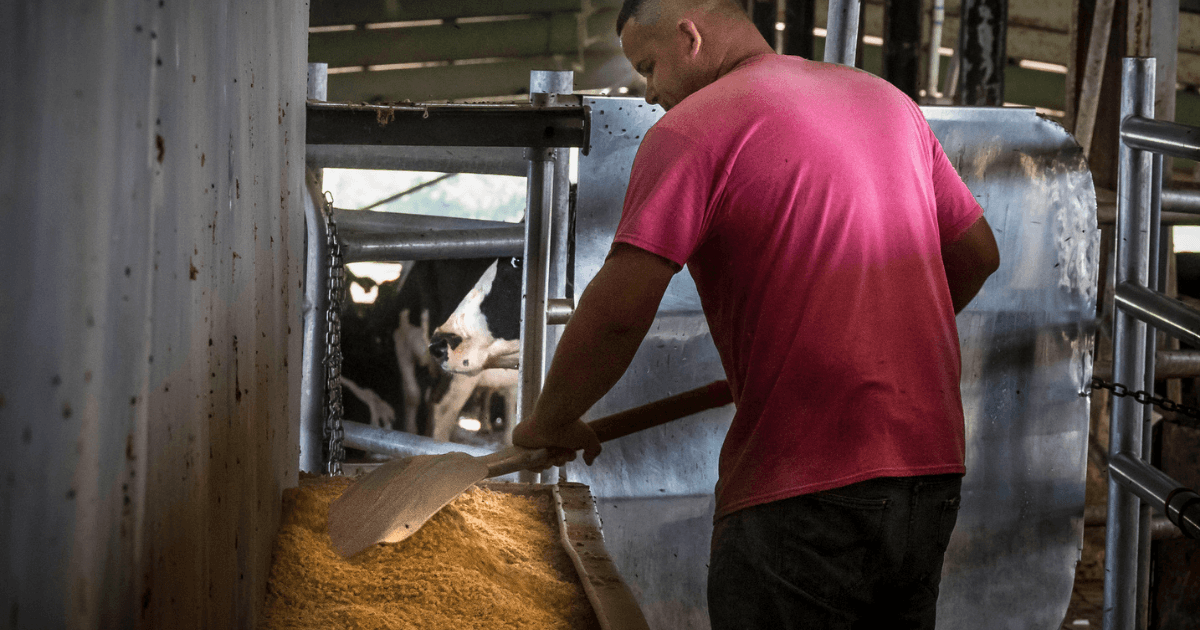
Currently, NWS infestations have been detected in livestock (cattle, sheep, and goats) and pet or herding dogs. Other farm animals and humans caring for the animals are at risk. Texas A&M Agrilife Extension recommends an “inspect, report, and protect” approach. Farmers and ranchers should frequently monitor animals for signs of NWS (see: Rethinking Livestock Management to Consider Screwworm, 2025 resource below). Report to your state animal health official (link below in Reporting section) immediately if you believe an animal on your property is infested, and to your local or state health department if a family member or worker may have NWS.
Who is at risk?
Anyone present in an area with the NWS fly could be affected. Those at higher risk in those areas include:
- People who frequently work with livestock;
- People who sleep outdoors, especially during the day;
- Those with open sores or wounds (including wounds as small as a tick bite) as the flies will lay eggs on open sores;
- Vulnerable populations, including people who are immunocompromised, those at extremes of age, and people experiencing malnutrition; and
- People who have a medical condition that renders them unable to swat away flies.
How can people who are in outbreak areas prevent infestation?
- Clean and cover all wounds, no matter how small or the location on the body or scalp.
- Wear loose-fitting, long-sleeved shirts and pants to limit exposed skin and use the Environmental Protection Agency-registered insect repellants: https://www.epa.gov/insect-repellents.
- If possible, avoid spending time where livestock are located or housed in rural areas.
- Avoid sleeping outdoors, especially during the day.
- Protect sleeping quarters with screens or bed nets.
What are the symptoms of NWS myasis?
- Feeling maggots/larvae moving within a skin wound or sore, ears, nose, eyes, or mouth.
- Seeing maggots around or in open sores.
- Painful skin wounds or sores.
- A foul-smelling odor from the site of the infestation.
- Unexplained skin wounds or sores that do not heal or that worsen within a few days.
- Bleeding from open sores.
What can we tell our communities?
- NWS is currently in the Texas and New Mexico. Everyone who lives or works in or around those states should be vigilant.
- Inspect animals for wounds or signs of infestation and use prevention methods. See What to Do if You Suspect New World Screwworm in Your Herd - Texas A&M AgriLife Extension Service at https://agrilifeextension.tamu.edu/what-to-do-if-you-suspect-new-world-screwworm-in-your-herd/. Animal infestations increase the risk for spread to humans and other animals.
- If a community member suspects infestation, encourage them to seek medical care immediately.
- If a patient discovers larvae in their wound, they should not try to remove any maggots or eggs masses themselves as this could result in NWS spreading in your area.
Treatment
- Use standard precautions when treating wounds and handling larvae.
- Remove and kill ALL visible larvae and eggs in patients with suspected NWS. This may require surgical removal. Failure to kill and properly dispose of all larvae or eggs may result in the new introduction and spread of NWS in the local environment. (See specimen handling and submission, below.)
- Reexamine treated lesions after 24–48 hours to confirm no live larvae remain. Remove and safely dispose of any remaining larvae as described below.
Diagnosis
There are many morphologically similar species of flies that can cause myiasis. Submission of larvae is critical for morphological diagnosis and species identification. Diagnostic confirmation for suspected human cases is available through CDC’s Diagnostic Parasitology Laboratory, DPDx, at dpdx@cdc.gov.
Specimen Handling & Submission
- Submit larvae for clinical diagnosis and confirmation at CDC.
- Send at least 10 larvae. If you have fewer than 10, submit them all.
- If you have more than 10, send at least 10.
- If multiple stages of larvae are present in the lesion, try to include a representative sample from each stage. Email dpdx@cdc.gov for specimen submission instructions.
- Place larvae and eggs in a leak-proof container with 70% ethanol. The volume of liquid should be sufficient to fully submerge larvae and eggs.
- The ethanol will both kill and preserve them for identification.
- 70% (or greater) isopropanol or 5%- 10% formalin are acceptable alternatives.
- Do not dispose of any larvae or eggs in the trash or outside on the ground.
- Collect the remaining larvae and eggs in a separate leakproof container, submerge them in alcohol, place the container into a zip-top plastic bag, and seal it. Dispose of the sealed bag in the trash.
Reporting Suspect Cases
- Report all suspected human cases immediately to the local or state public health department (Epi on Call: https://libraries.cste.org/after-hours-contact/), followed by CDC at 404-718-4745 or parasites@cdc.gov.
- Human infestations can be an indication of local circulation of flies and possible infestations in animals. Areas where human infestations are identified will need to be evaluated by agriculture and public health officials for implementation of control measures.
- Direct clinical inquiries and patient management-related questions to your local or state public health department (Epi on Call) or to CDC’s Parasitic Diseases Hotline at parasites@cdc.gov or 404-718-4745.
- Direct clinical inquiries outside of regular business hours to CDC’s Emergency Operations Center at 770-488-7100.
- Direct non-clinical questions to newworldscrewworm@cdc.gov.
- Report cases in livestock or pets to your state animal health official: https://usaha.org/wp-content/uploads/2026/02/STATE_ANIMAL_HEALTH_OFFICIALS.pdf.

Health Network as a Resource
Health Network is Migrant Clinicians Network’s virtual care coordination program. When patients move before receiving test results, completing treatment, or finding a new specialist, their health suffers. Health Network connects patients to care at their next destination, so that migration does not have to be an impediment to care. If a patient is moving or considering moving, be sure to pre-enroll that patient in Health Network so we can pick up their care coordination on your behalf. For example, a patient treated for NWS myiasis who intends to move for farmwork may need follow-up to ensure the wound heals properly. They can get assistance from Health Network. Read how Health Network works and its recent expansion in this article: https://www.migrantclinician.org/streamline/health-network-gps-guides-patients-through-our-health-system. Learn more and access enrollment forms on our Health Network page: https://www.migrantclinician.org/our-work/health-network.html.
Learn more:
- New World Screwworm Outbreak, from CDC: https://www.cdc.gov/new-world-screwworm/situation-summary/index.html
- Communication Resources | New World Screwworm | CDC: https://www.cdc.gov/new-world-screwworm/communication-resources/index.html
- Resurgence of New World Screwworm in the Americas: What Healthcare Providers Need to Know | COCA | CDC: https://www.cdc.gov/coca/hcp/trainings/resurgence-new-world-screwworm.html
- HHS and USDA Confirm Singular Traveler-Associated New World Screwworm Case; Precautionary and Proactive Surveillance Ongoing | USDA : https://www.usda.gov/about-usda/news/press-releases/2025/08/26/hhs-and-usda-confirm-singular-traveler-associated-new-world-screwworm-case-precautionary-and#:~:text=(Washington,%20D.C.,%20August%2026,this%20case%20is%20very%20low.
- New World Screwworm: What You Need To Know | USDA | APHIS: https://www.aphis.usda.gov/sites/default/files/screwworm-brochure-english.pdf
- Current Status of New World Screwworm | Screwworm.gov : https://www.aphis.usda.gov/livestock-poultry-disease/stop-screwworm/current-status?page=1
- Rethinking Livestock Management to Consider Screwworm - Texas A&M AgriLife Extension Service : https://agrilifeextension.tamu.edu/rethinking-livestock-management-to-consider-screwworm/
- What to Do if You Suspect New World Screwworm in Your Herd - Texas A&M AgriLife Extension Service: https://agrilifeextension.tamu.edu/what-to-do-if-you-suspect-new-world-screwworm-in-your-herd/
- Companion Animal Care in the Face of the New World Screwworm (NWS) Threat - Texas A&M AgriLife Extension Service : https://agrilifeextension.tamu.edu/companion-animal-care-nws/
- Cuidado de animales de compañía frente a la amenaza del Gusano Barrenador del Nuevo Mundo (GBNM) - Texas A&M AgriLife Extension Service : https://agrilifeextension.tamu.edu/companion-animal-care-nws/
- Wildlife Monitoring and Management for New World Screwworm - Texas A&M AgriLife Extension Service : https://agrilifeextension.tamu.edu/wildlife-monitoring-and-management-for-new-world-screwworm/
- Monitoreo y manejo de fauna silvestre para el gusano barrenador del Nuevo Mundo - Texas A&M AgriLife Extension Service: https://agrilifeextension.tamu.edu/monitoreo-y-manejo-de-fauna-silvestre-para-el-gusano-barrenador-del-nuevo-mundo
- Weather-related Emergencies and Disaster Management - Information Hub | Migrant Clinicians Network : https://www.migrantclinician.org/weather-related-emergencies-and-disaster-management-information-hub
Citations:
- United States Department of Agriculture Animal and Plant Health Inspection Service. New World Screwworm: What You Need To Know = USDAa. USDA APHIS. June 8, 2026. https://www.aphis.usda.gov/sites/default/files/new-world-screwworm-what-you-need-to-know-brochure.pdf. Accessed: 07/08/2026.
- United States Department of Agriculture. Current Status of New World Screwworm = USDAb. Screwworm.gov. July 7, 2026. https://www.aphis.usda.gov/animals/animal-health/livestock-and-poultry-disease/current-status. Accessed: 07/08/2026.
- United States Department of Agriculture Animal and Plant Health Inspection Service. New World Screwworm Ready Reference Guide—Maps & Timelines. USDA APHIS. November 1, 2016. https://www.aphis.usda.gov/sites/default/files/screwworm_rrg.pdf. Accessed: 07/08/2026
- Centers for Disease Control and Prevention. New World Screwworm Outbreak. CDC. June 30, 2026. https://www.cdc.gov/new-world-screwworm/situation-summary/index.html. Accessed: 07/08/2026.
- Hanna J and Bynum R. What to Know About the New World Screwworm Fly and Its Reappearance in the US. Yale Climate Connections. June 8, 2026. https://yaleclimateconnections.org/2026/06/what-to-know-about-the-new-world-screwworm-fly-and-its-reappearance-in-the-us/. Accessed: 07/08/2026
- Stump Denton A and Shike J. Winter: the Secret to Slowing the Spread of Screwworm. Drovers. Oct. 02, 2025. https://www.drovers.com/news/industry/winter-secret-slowing-spread-screwworm. Accessed: 07/08/2026
This article of Streamline is supported by the National Institute of Food and Agriculture (NIFA) and the United States Department of Agriculture (USDA) under award number 2023-67017-39626.