Imagine you are on vacation in a new country and, suddenly, you lose your phone. Without directions, support, or communication, you would likely feel lost in an unfamiliar environment. Now, imagine that, without your phone, you suddenly become sick, while far from home. You do not know the health system, you may not speak the local language, and you may not have insurance or know how to use your insurance if you do have it. In that moment, even the first step feels overwhelming. Many people experience feeling unanchored when debilitating health issues occur -- here in our own communities.
Across the United States, patients who are unwell often must cope with their illness while also trying to navigate language differences, lack of connection in the community, unfamiliarity with the health system, insufficient or no health insurance, and inflexible work situations that may not accommodate a trip to a doctor – all of which limit their ability to find care.
These same patients may also be experiencing a wide range of issues outside of their immediate health status that can affect their ability to get care. If parents are worried about where they will sleep tonight or what their children will eat tomorrow, preventive screenings and follow-up appointments are simply not their priority. Ongoing access to care for a health need, therefore, starts long before a patient finds a clinic.
That is why Migrant Clinicians Network (MCN) is relaunching our innovative program, Health Network, to integrate growing community needs and build a flexible, evidence-based, and community-driven lens into our model – with the ultimate goal of efficiently increasing access to care for people who otherwise would not be able to get the care they need.
Health Network is MCN’s care coordination program. It started in 1996 to assist patients who needed to move while being treated for active tuberculosis disease and who were at risk for being disconnected from that critical care because of their mobility. Since then, Health Network grew to support many health conditions like cancer and diabetes and eventually expanded to serve patients with any ongoing health need. Health Network has served tens of thousands of patients, including thousands of migratory and seasonal agricultural workers (MSAWs), to find the care they need, despite a myriad of obstacles in their way, including mobility.
Health Network is more than coordination: it is like GPS, carefully guiding patients through every step of a complicated health system to get them through the maze of actions they need to take in order to get the care that they need.
But GPS only works if people trust it. MCN’s Health Network is now working to better identify and meet the evolving needs of our communities, to build trust in those communities, so we can effectively serve all patients. Improvements to Health Network strengthen our ability to reach people, like MSAWs, where they are. To meet these goals, Health Network is: providing a larger range of services; augmenting the training for Health Network Associates; expanding eligibility for patients; equipping a larger range of health professionals that are able to enroll patients, for example, Community Health Workers (CHWs); and growing its educational focus.
A Larger Range of Services: We have found that patients cannot attend to their health needs when their basic physical needs like food and housing are not met. This conclusion is in line with the literature, which indicates not only that issues like housing instability and food insecurity are associated with the postponement of medical care, but those issues are simultaneously associated with increased health needs. In one 2023 review of 42 studies, housing instability was found to be associated with poor cardiometabolic health, including higher prevalence of obesity, hypertension, diabetes, and cardiovascular disease, and worse hypertension and diabetes control. Similarly, food insecurity is associated with an increased probability of multimorbidity. These increased health needs for people who cannot meet their basic needs are overlayed with delayed utilization of health care, at exactly the time when they would need more health care to stabilize their health and ensure that their acute health needs do not worsen.
It is important to note that these associations are potentially bidirectional; a person in poor health may be unable to maintain the economic resources to keep secure housing and steady access to healthy food. Those who lose their jobs may be unable to access health insurance. In all cases, however, it is important to recognize and respond to the overlapping basic needs of our community members – not just health care, but also access to food, housing, childcare support, health insurance, and more – to sustain their health. Health Network now assists patients in connecting to agencies or organizations that provide social support such as food assistance, housing resources, and other basic needs — stabilizing the most urgent issues first so they can focus on their health without fear or distraction.
Additional Training for Health Network Associates: CHWs make a difference. In a randomized controlled trial of food-insecure patients with diabetes, the control group received food, and a second group received food and counseling and resource linkages from a CHW. There was a statistically significant drop in diabetes A1C test results among the patients in the group that received CHW support, even though both groups received healthy foods. Additionally, the drop in the CHW-supported group was sustained six months later. This is one of many studies that indicate that CHW interventions have significant and lasting positive health impacts on the communities they serve. Health Network Associates have achieved certification as CHWs and Patient Navigators through programs like the Patient Navigator Training Collaborative or the Texas Department of State Health Services.
Health Network Associates are more than service providers, they embody a collegial approach that is grounded in evidence showing the effectiveness of community-based, trusted messengers. Our Associates share heritage, lived experiences, and languages with the populations they serve. This alignment builds trust and strengthens communication, making it easier for patients to navigate complex health and social systems. Through additional training, such as certification as Patient Navigators and Community Health Workers, our bilingual staff combine professional skills with personal connection. This unique model transforms outreach into a relationship of trust, support, and care.
Expanding Eligibility for Patients: In addition to serving MSAWs who need to move before their treatment is complete, Health Network serves any person who is unable to navigate the health system or meet their basic needs. Opening this service to larger numbers of our communities ensures that we create pathways for healthy living for all members of our community, addressing the nation’s most pressing health concerns, which include chronic disease, mental health issues, obesity, nutritional deficiencies, and exposure to environmental toxins. It also ensures that MSAWs who are “missed” during intake do not miss the opportunity to take advantage of Health Network. Some MSAWs, due to the temporary nature of their work, decline to indicate their agricultural work in medical intake forms and medical histories. This should not be a barrier to enrollment in Health Network. We want to make sure that clinicians are aware that Health Network is not limited to one occupation. Simultaneously, we remain committed to serving agricultural workers and people who need to move before their treatment is completed, as we have for almost three decades.
Equipping Health Professionals: Traditionally, credentialed health care providers could enroll patients in Health Network. To build ongoing and long-term trust with families and communities and to validate Health Network as a safe and reliable resource, we are partnering with community-based organizations (CBOs). The partnership serves to invite CHWs, outreach workers, and other health professionals embedded within the community to enroll their community members who need assistance in finding care into Health Network. CBOs are key partners that act as trusted messengers around issues of health and well-being. By building long-term partnerships with CBOs and opening enrollment to CHWs and other health professionals within these CBOs, Health Network will maximize its ability to successfully support the communities who need it most.
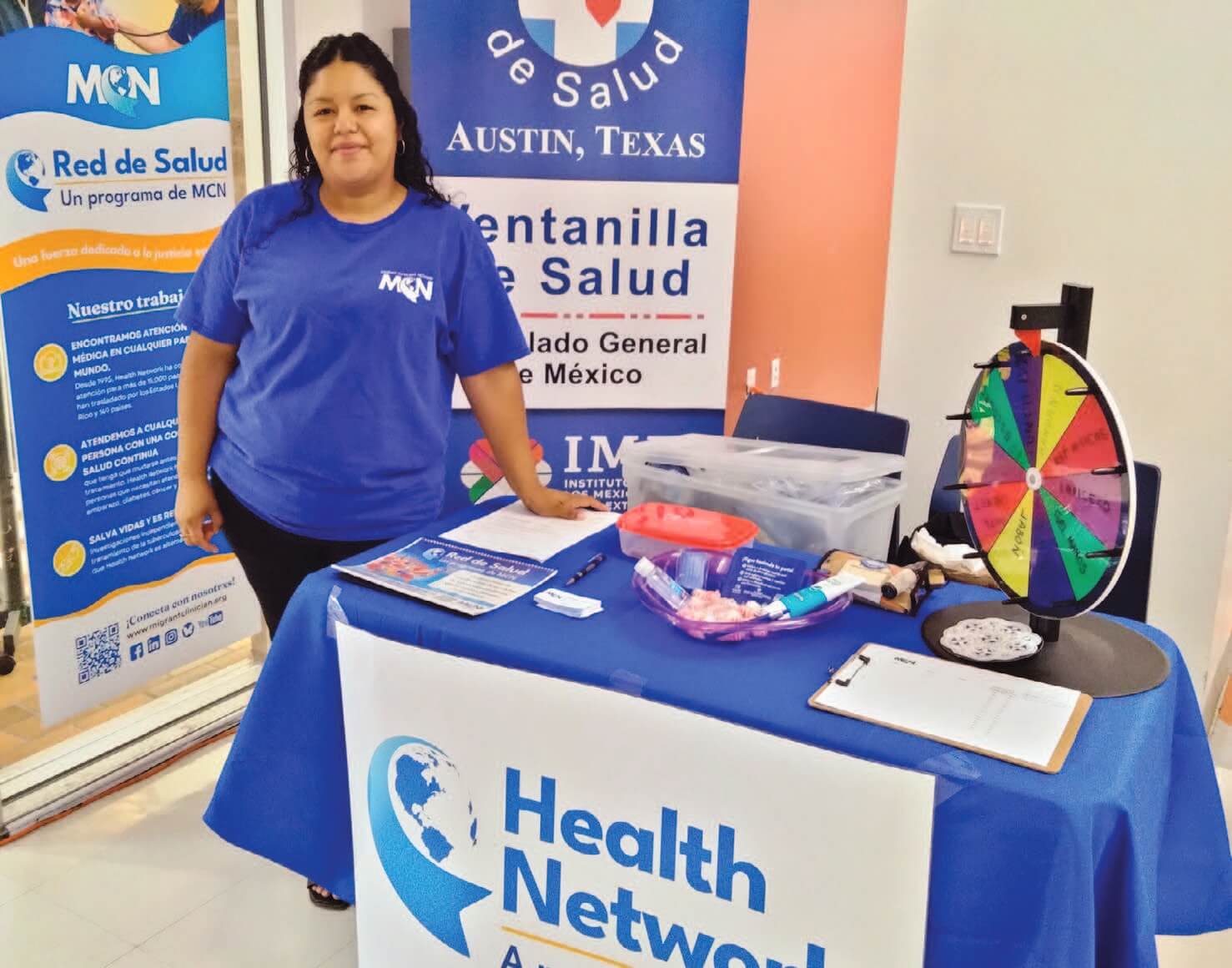
Educational Focus: To further embed ourselves into communities, Health Network is increasing its visibility in community events. We provide educational materials and visual tools like our comic books, to teach families how to access care and navigate the health system, step by step. This educational focus opens the door to services and equips families to access care with more confidence and clarity. We have already begun this expansion in our home state of Texas. Health Network Associates have joined our teams at local Ventanilla de Salud health fairs to assist in enrollment of patients as needed.
Longer term, we hope to further professionalize and expand the model, to benefit more communities across the United States – because our communities are too often lost when trying to navigate our health system.
Health Network strengthens our communities by opening the pathway for patients to feel safe and equipped to engage in the care they need. Our high-impact, low-cost, community-embedded care coordination ensures patients can get access to care earlier in their disease progression, saving resources and improving health outcomes.
This publication is supported by the Health Resources and Services Administration (HRSA) of the U.S. Department of Health and Human Services (HHS) as part of an award totaling $1,204,180.00 with 0 percentage financed with non-governmental sources. The contents are those of the author(s) and do not necessarily represent the official views of, nor an endorsement by HRSA, HHS, or the U.S. Government. For more information, please visit HRSA.gov.