MCN’s evidence-based patient-facing resources expand their reach, thanks to community allies and the adaptability of the materials.
As a national nonprofit, Migrant Clinicians Network (MCN) shares resources and evidence-based strategies with health centers, partner organizations, and other health promotion allies across the United States, with tools specifically designed to equip communities to improve the health of community members and increase access to care when needed. In 2024, MCN reached a total of 6,867 Community Health Workers (CHWs)/promotores de salud, outreach workers, and health care professionals through its webinars. In collaboration with partners, we also provided direct support to more than 29,000 individuals in local communities with resources, screenings, and in-person educational sessions.
Yet, these numbers do not take into account the tens of thousands whose lives are improved by informed and equipped clinicians and communities. The ripple effects of our train-the-trainer sessions, our patient-facing comic books, and our webinars spread deep into communities around the country. This article describes how two organizations came together to bring diabetes information to Minnesota workers using the popular MCN comic book, My Health is My Treasure: A Guide for Living Well with Diabetes.
The United States is experiencing an epidemic of diabetes. Almost 12% of the population is diagnosed with diabetes, and another 22.8% of US adults are estimated to have diabetes that is undiagnosed. According to the US Department of Health and Human Services, by 2022, Hispanic adults were diagnosed with diabetes at a rate that is 13% higher than the overall population, and have higher rates of visual impairment, a complication of diabetes. Last year, one community member-based organization in Minnesota responded to this high incidence of diabetes with a diabetes awareness campaign in Spanish. They developed a training for CHWs to effectively reach Minnesota workers who speak Spanish with this information. Leadership of the organization’s Health and Wellness Program reached out to Elmer Romero, Director of Popular Education at a partner organization that is focused on workers, to collaborate on this diabetes awareness campaign.
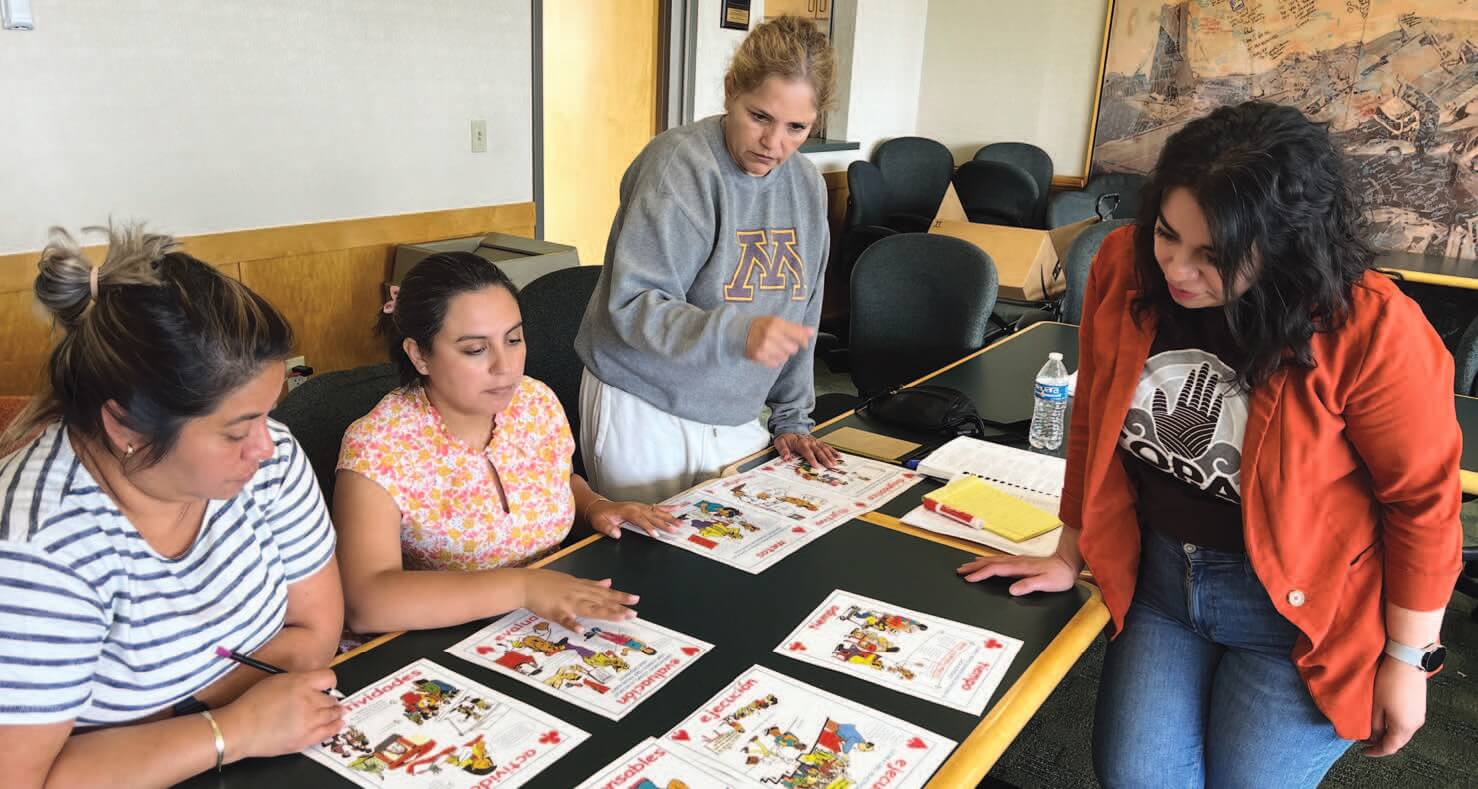
To assist Spanish-speaking Minnesotan workers to better understand diabetes, Romero suggested the integration of MCN's comic book, My Health is My Treasure as an educational resource. To enhance its effectiveness, his team created a new complementary resource: a puzzle that staff involved in the campaign could use to incite dialogue among the workers and allow them to acquire new knowledge regardless of literacy level. Because My Health is My Treasure is free, customizable, and available in Spanish, the organizers could adapt the pre-designed and tested resource to ensure their puzzle would be accessible, relevant, and attractive to the workers.
Romero and his popular education team then set about the task of identifying which diabetes concepts from My Health is My Treasure to share and which images to use in the puzzle to raise diabetes awareness, understanding, and action. According to Romero, the puzzle acts as a “code” that participants, through gradual and exploratory dialogue, can decode together. The images provide elements for reflection, leading to collective discussion and interpretation of ideas. This code allows the use of the participatory technique of “see, judge, and act,” a technique adopted by popular education, where participants collectively discuss and interpret what they see in the images, what is happening, how it applies to their reality, and how to put what they have learned into practice. Through this method, they achieve a higher level of understanding and knowledge. This inductive and playful approach is what makes this puzzle an effective teaching tool.
Once the draft of the puzzle was developed, the team provided it to two additional partner organizations to put it to the test, gathering excellent feedback from resource testing with Houston workers. After testing, CHWs were trained to utilize the comic book and puzzle to begin the diabetes awareness campaign.
This diabetes awareness activity sought to reach migratory and seasonal agricultural workers (MSAWs), as well as construction, dairy, cleaning, and landscaping workers in south-central Minnesota. Thanks to the member-based organization’s financial support, the puzzles and comic books were printed and distributed at educational sessions. In total, CHWs brought the topic of diabetes to 1,121 people through 269 workshops or educational sessions in parks, fairs, community businesses, churches, schools, trailer parks, apartments, and worker centers. After the conclusion of the diabetes awareness campaign, partner organizations continued to use MCN's comic book and the puzzle to educate Houston-area workers.
This is a great example of how MCN's free and adaptable resources create the launchpad for community-based organizations to:
- Collaborate when their goals and service target populations are similar,
- Increase the visibility and reach of the health education resources they develop,
- Improve the accessibility of health information regardless of literacy level limitations,
- Maximize their educational creativity from existing adaptable materials, and
- Reduce the costs associated with outreach and health promotion activities.
“It is important that there exist customizable materials that use the pedagogical model of popular education. These models really generate learning,” Romero said. Popular education teaches through dialogue, provokes conversations, and strengthens people's critical thinking, he added. “It is not only about seeing and thinking, but also about taking action, making an impact on their lives. I am a strong believer in popular education because I have seen it work and when I apply it and it is applied well, it works. It works not only because of its methodologies, but also [because it incorporates] the ethical and political aspect of each topic.”
Romero also emphasized that organizations’ own CHWs must lead by example: “These materials should first be used for our own self-care so that we can be caregivers for caregivers.” By engaging and implementing the materials, CHWs can improve their own health while testing the materials to make sure they will resonate with their communities. “We must systematically plan our work and evaluate it effectively, as this helps improve the materials and bring them to more people,” he concluded.