In the southeastern coastal town of Yabucoa, summer high temperatures are arriving earlier, lasting longer, and weighing heavier on those who can least afford protection: agricultural workers. Yabucoa’s fertile valley has shifted over time from primarily sugar cane to a diversified agricultural economy, including plantains, bananas, root and tuber crops, vegetables, melons, and much more. Announcements of a new rum company promise to return acreage to its sugar cane origins with a modern approach, including intercropping to improve soil health. All of this economic output is dependent on a large and aging agricultural worker population that is contending with hotter work days. When I arrived in Yabucoa this past June, the air was thick and still, the kind of heat that silences a room. Yet, as I walked into the waiting area of COSSMA, the community health center serving the region, there was conversation and laughter. Patients greeted the staff by name. Even in discomfort, there was warmth, a reminder that health centers are often the heart of the community.
As part of my graduate practice experience through Migrant Clinicians Network’s (MCN) project titled Building Capacity Among Community Health Centers to Address Weather-Related Extreme Phenomena on Agricultural Communities and Workers in Puerto Rico and the US Virgin Islands, I partnered with COSSMA’s team to bring attention to the growing occupational and environmental risks of extreme heat. My assigned focus was on Module 5: Occupational Health During Extreme Climate Events, on the Support Curriculum for Health Service Providers, which explores the relationship between work, environment, and well-being, especially for agricultural and outdoor workers.
A Setting Still Recovering
Yabucoa was the first municipality hit by Hurricane María in 2017 and one of the last to have electricity restored. The storm changed more than its landscape -- it altered the community’s sense of safety. The fields that once symbolized sustenance also came to represent vulnerability.
Nearly eight years later, that vulnerability persists. Heat waves and blackouts now intersect with chronic health issues like hypertension, diabetes, and asthma, forming a complex web of risks. When I sat with COSSMA’s outreach educators, they shared what they see daily: patients who skip appointments during high-heat days because transportation becomes unbearable, or workers who keep laboring under the sun without proper hydration because “it’s always been like this,” when, in reality, it hasn't.
Turning a Waiting Room into a Learning Space
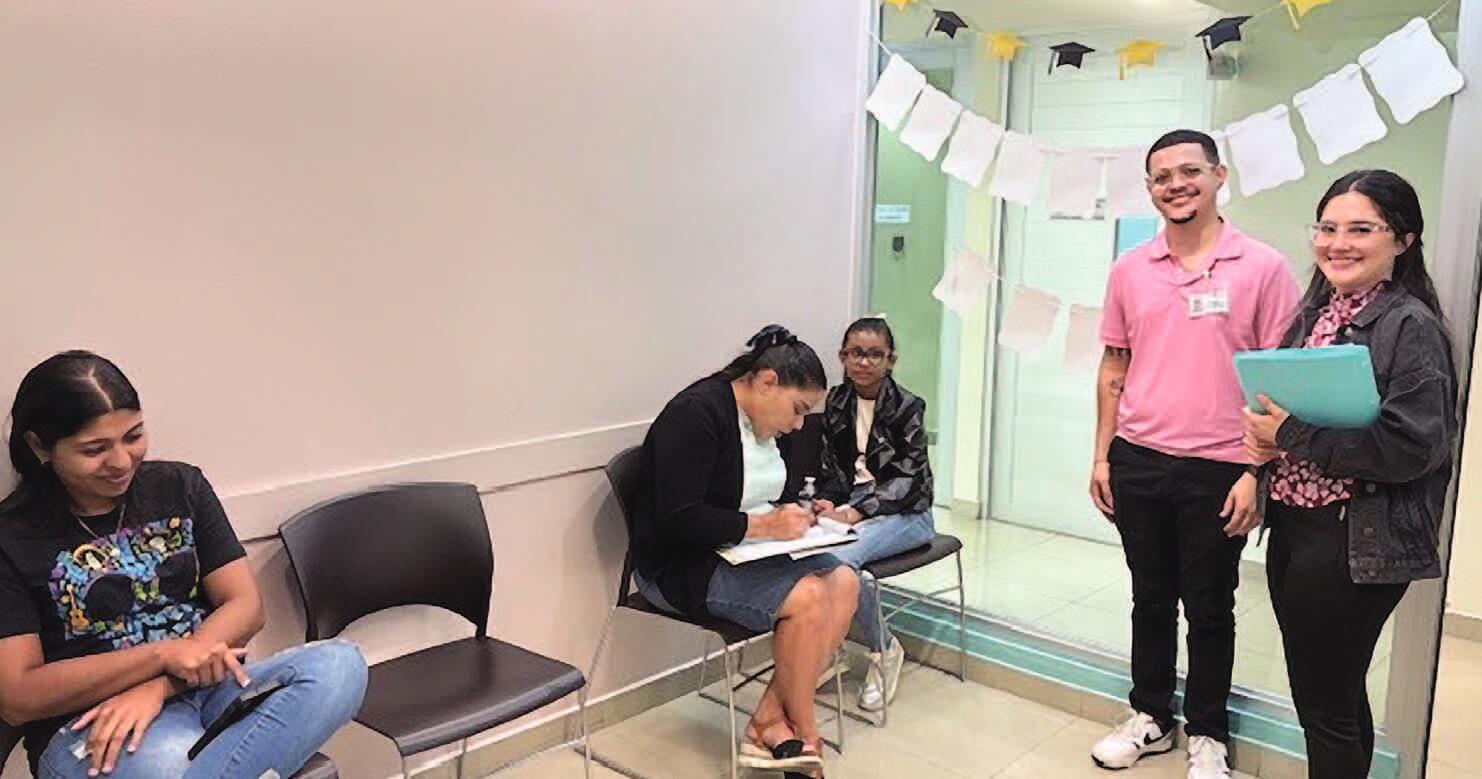
Our activity took place in June, in the main waiting area of the Yabucoa clinic, where health education blends seamlessly with check-ins and consultations. With support from fellow student Gabriela Avilés and COSSMA’s educators, we transformed the space into a brief, informal classroom.
The setup was simple: a small presentation projected onto a wall, colorful visuals, and a conversational tone. We discussed the signs of heat exhaustion, ways to prevent dehydration, and practical tips for keeping medicines safe during blackouts. What mattered most was keeping the language clear, relevant, and rooted in the community’s daily experience.
As the presentation went on, patients began sharing their own strategies — placing damp towels on their heads, keeping buckets of water near the door in case of outages, or checking in on neighbors living alone. Their comments turned the session into a dialogue. The expertise in that room didn’t just come from the PowerPoint, it came from lived experience.
One woman raised her hand and asked how to keep insulin cool when the power goes out. Another wanted to know how to reduce indoor heat in a zinc-roof home. Their questions reminded me that adaptation begins not with data, but with people trying to solve problems in real time.
Lessons from the Field
Throughout this experience, I learned that community health outreach isn’t about bringing answers — it’s about creating shared understanding. The role of technical partners like MCN is not to instruct, but to accompany, offering evidence-based tools that CHCs can adapt to their context.
COSSMA’s staff already knew the challenges. What they needed was time, space, and resources to frame them within a broader conversation about disasters and health. With MCN’s help, we connected local wisdom with technical guidance.
After the presentation, one participant approached me and said, “I never realized that feeling dizzy in the heat could be dangerous. Now I’ll know what to look for.” That small comment carried the weight of success, a sign that awareness had turned into action.
Being part of this effort filled me with deep pride, to witness how, even after years of recovery from María and despite limited resources, the community in Yabucoa continues to rise with dignity, care, and hope through its own health center. What moved me most was seeing how this agricultural community came together — patients, clinicians, and students -- to create something that truly embodied integrated, compassionate care.