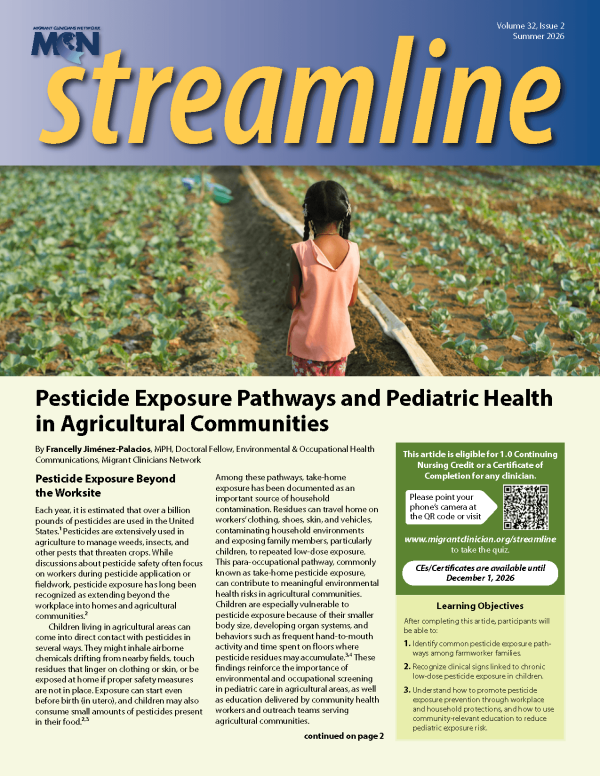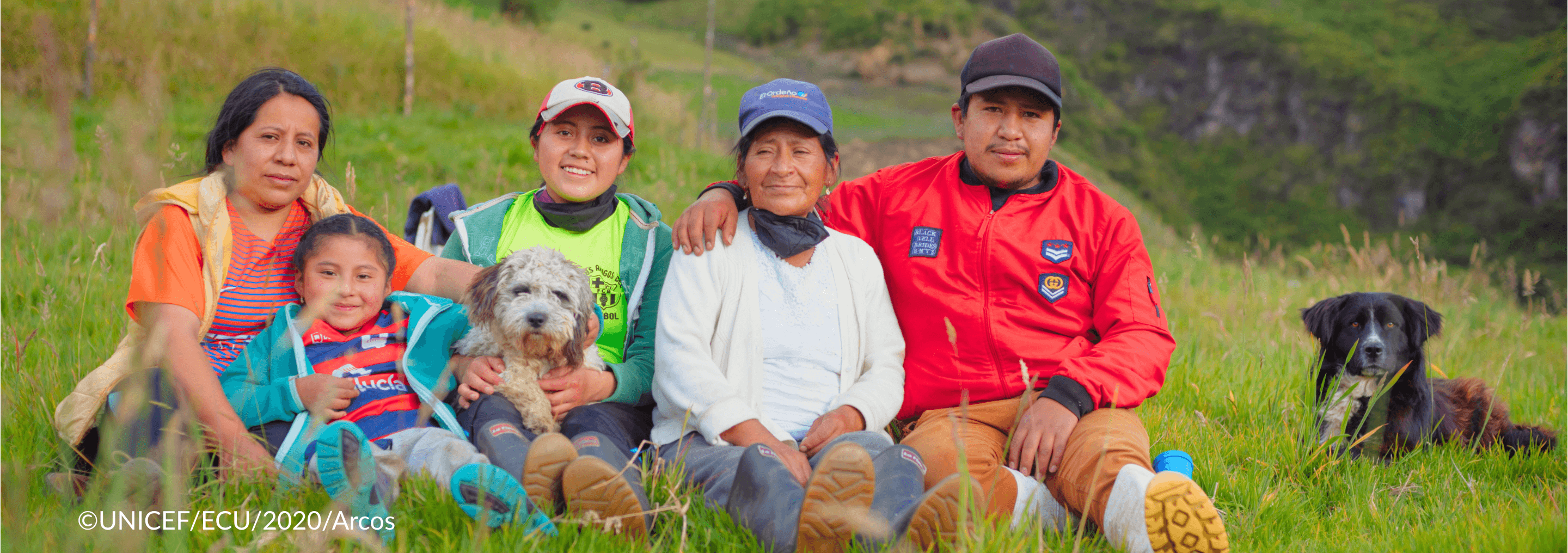
Practical resources for health centers to identify and respond to factors affecting farmworkers and agricultural communities
At the heart of rural communities in the United States are an estimated two to three million people who take seasonal farmwork jobs every year. These workers include migratory and seasonal agricultural workers (MSAWs), and the 400,000-plus workers who are arriving at farms this year under the H-2A program. The H-2A program is a federal guest worker visa program that enables workers from other countries to temporarily work at a specific agricultural location in the US before returning to their country of origin. The program has expanded rapidly from over 150,000 workers in 2016 to a projected 400,000 or more this year, based on the pace of the first half of the 2026 certification.1,2,3
Farmwork is physically demanding, which requires a baseline of physical health to perform the job. Many people assume that daily physically demanding work leads to better health. However, many conditions in which farmworkers live and work can negatively influence their overall health, subjecting them to higher chronic disease burden. In a 2025 study, precarious employment conditions among farmworkers – organized by the researchers by material assets, work and living arrangements, job security, worker benefits, and social vulnerability -- were scored and compared.4 The study used data from the National Agricultural Workers Survey to show that high scores of precarity were associated with increased chronic disease risk factors and cardiovascular disease. A 2022 study in California analyzed three California farmworker datasets to conclude that health concerns like obesity and hypertension were linked to food insecurity, income, and lack of health care access.5 Although more research is needed, particularly on intervention studies and research on farmworker subgroups,6 it is clear that the conditions for health and well-being for farmworkers extend beyond physical activity.
The Rippel Foundation originally conceptualized “Vital Conditions for Health and Well-Being” as a framework to identify and address factors that affect health and well-being outside of the exam room. The framework includes seven factors to conceptualize holistic well-being and can be used to identify levers for community change and improvement to produce population-level well-being.7 In 2025, the National Association of Community Health Centers spotlighted these conditions, including stories from health centers on how communities identify and address each of the factors.8
Migrant Clinicians Network (MCN) has numerous resources to support health centers in addressing each of the vital conditions. Here, each vital condition is outlined based on definitions used by the framework, followed by a related MCN or trusted partner resource.
Basic Needs for Health and Safety
The basic requirements for health and safety include access to nutritious food, safe drinking water, fresh air, sufficient sleep, routine physical activity, safe and satisfying sexuality and reproduction, freedom from violence and addiction, and routine care for physical and behavioral health.
Health Network is MCN’s virtual care coordination system that assists individuals with ongoing health needs to access care for their conditions. In 2025, Health Network expanded to allow outreach workers and community health workers to enroll patients in addition to health care providers. MCN has bilingual one-page informational sheets to explain the Health Network process and to the types of patients Health Network can assist. Visit www.migrantclinician.org/healthnetwork.
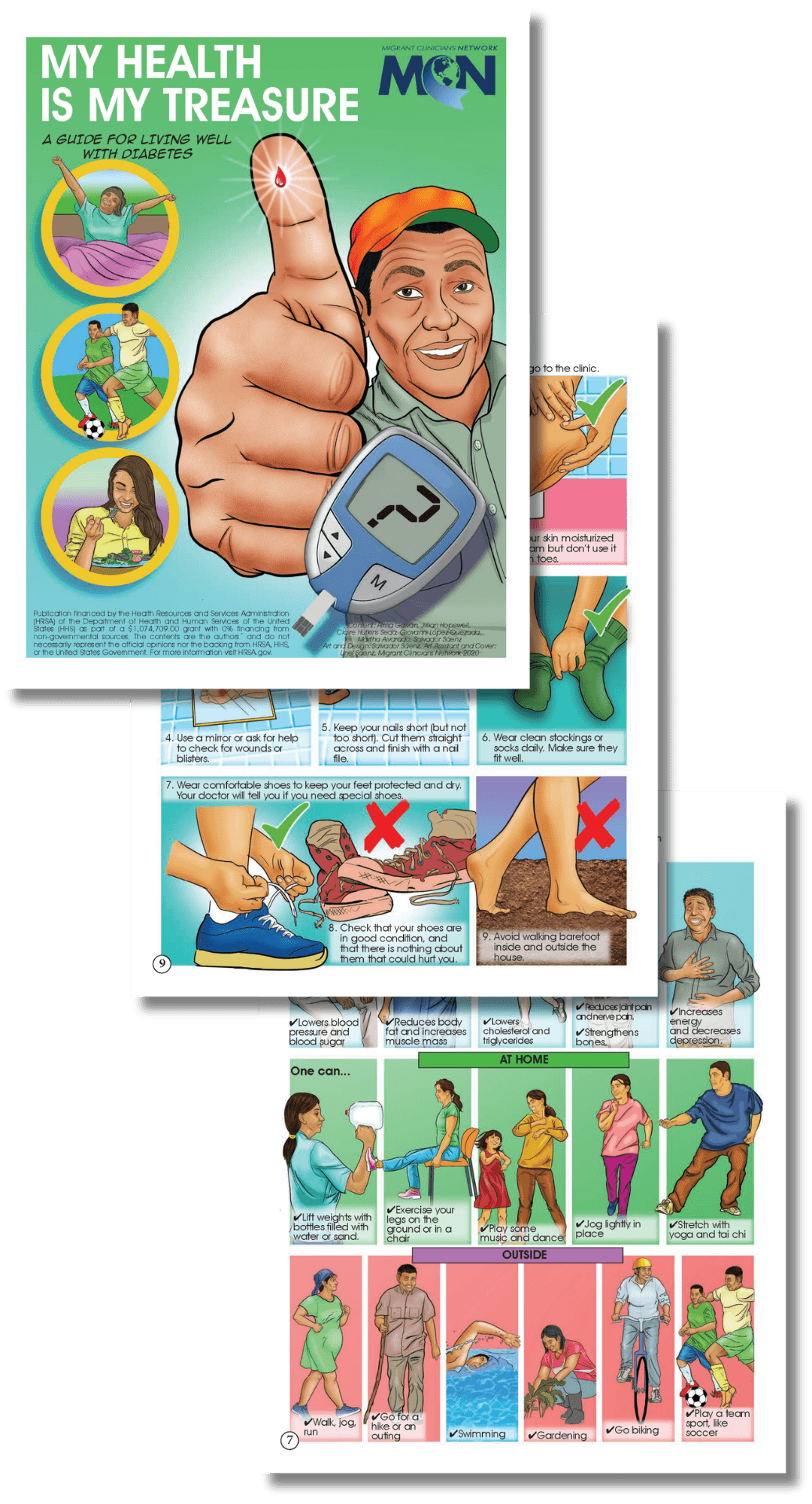
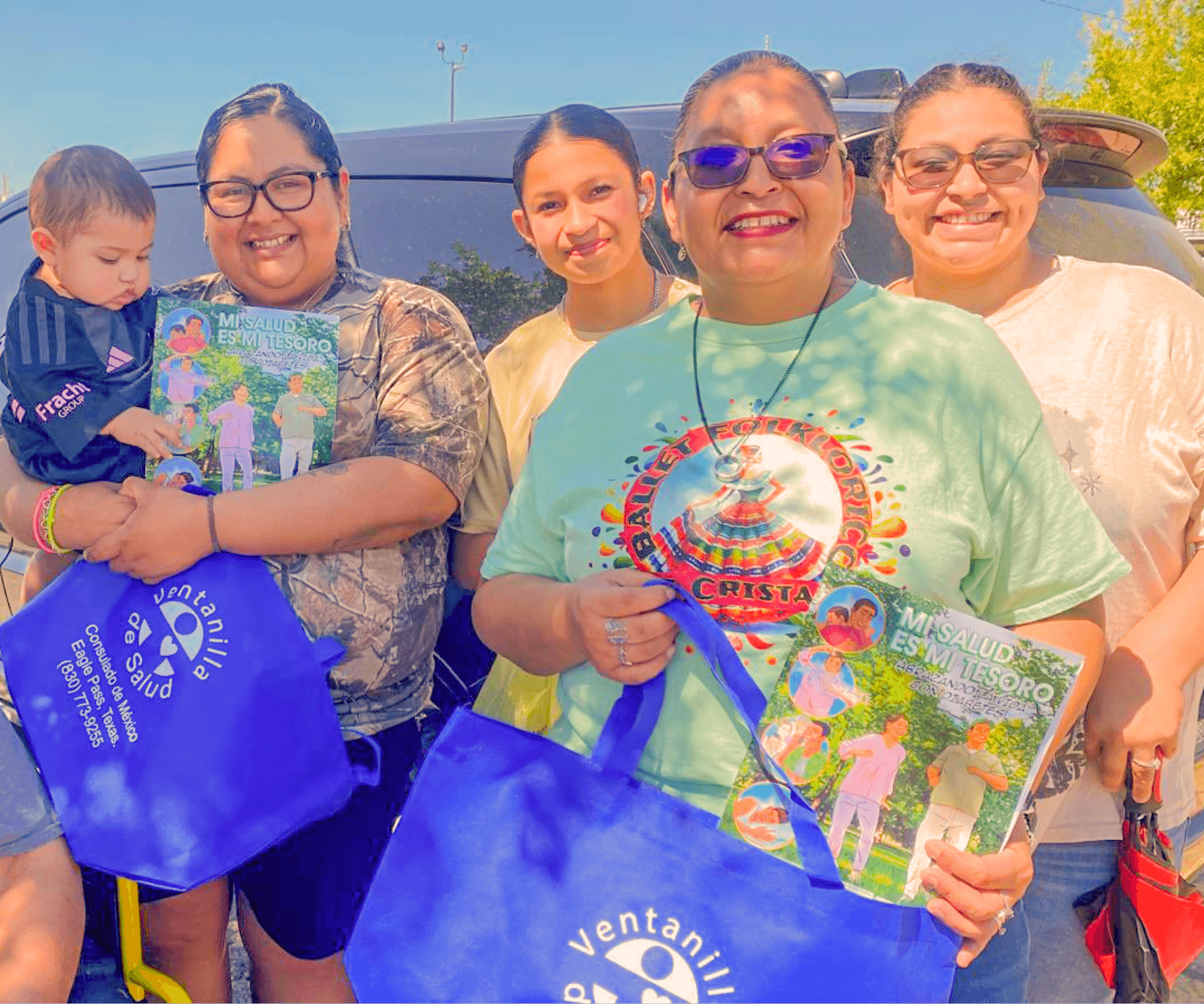
MCN’s Comic Books in English and Spanish equip farmworkers with education on food and exercise like Mi salud es mi Tesoro/My Health is My Treasure, our diabetes comic book. Visit www.migrantclinician.org/comics
MCN’s Respiratory Health and Protection Hub provides numerous resources in English and Spanish including our air quality comic book (Clear the Air!/Nadie sabe que respire… ¡Hasta que la falta el aire!), an archived webinar, a train-the-trainer flipchart, facilitator’s guide, and radio PSA. https://www.migrantclinician.org/respiratory-health-and-protection
Humane Housing
Safe structures, adequate space, affordable costs, and proximity to other parts of one’s life like school, work, food, recreation, and nature are included in this vital condition.
Farmworkers are often provided housing. H-2A workers exclusively live in housing provided by the grower. Proximity to farms and chemicals used on farms, farm isolation, and substandard construction can reduce housing quality. Aunque cerca… sano is MCN’s comic book about children’s exposure to pesticides in the home: https://www.migrantclinician.org/resource/pesticides-nearby-healthy-guide-protect-children-pesticides-comic.html
Meaningful Work and Wealth
Job training, good-paying work, and savings are all highlighted in this vital condition. Farmworkers, particularly those whose first language is not English, may struggle to understand available job training, and warning labels on farm equipment or pesticides.
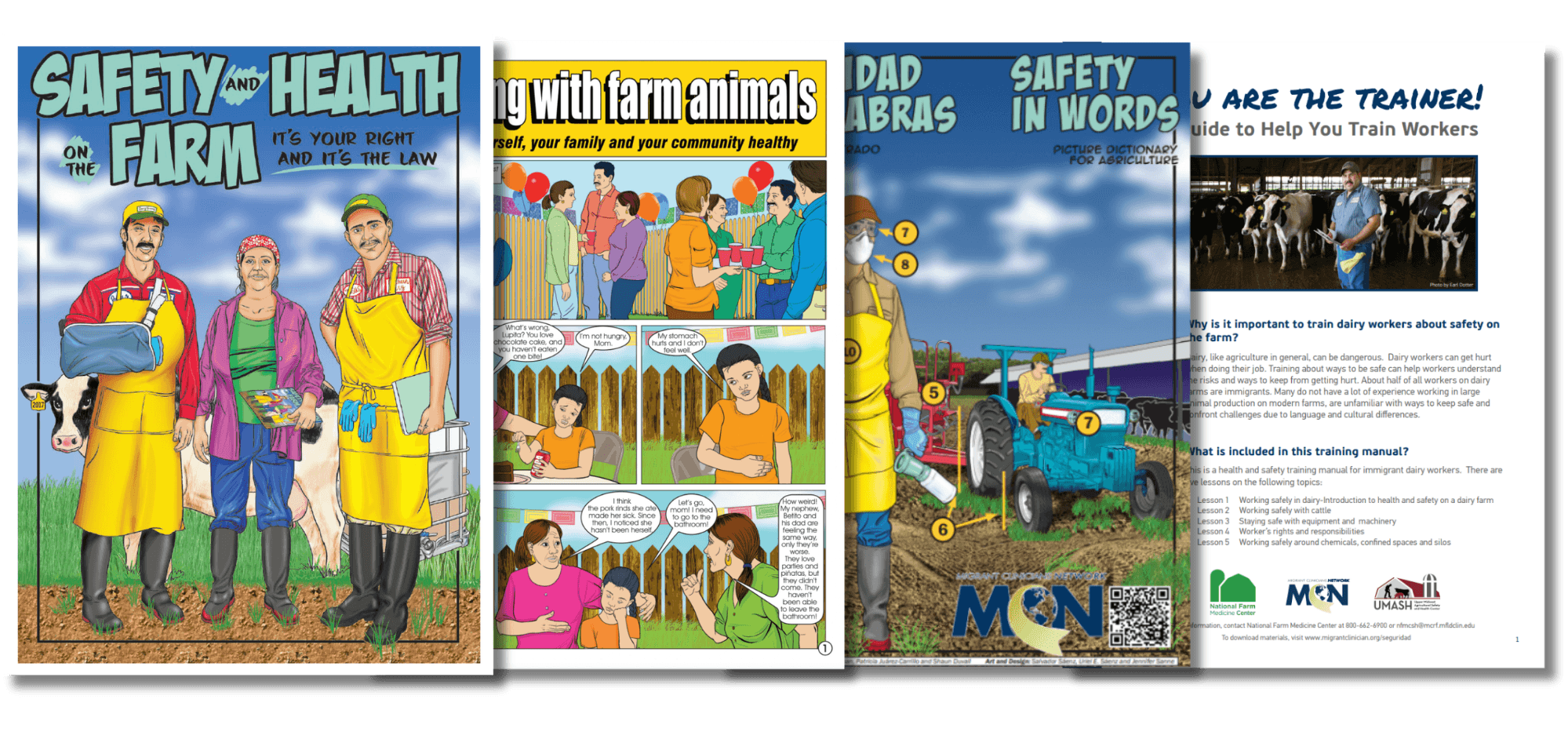
MCN provides extensive train-the-trainer materials to equip farmworking communities with the education they need to stay safe on the job. Seguridad en las lecherías is a bilingual dairy worker safety training kit for community health workers to train dairy workers, including evaluation tools, a step-by-step facilitator’s guide, and a bilingual picture dictionary so farmworkers can learn key words about their safety equipment.
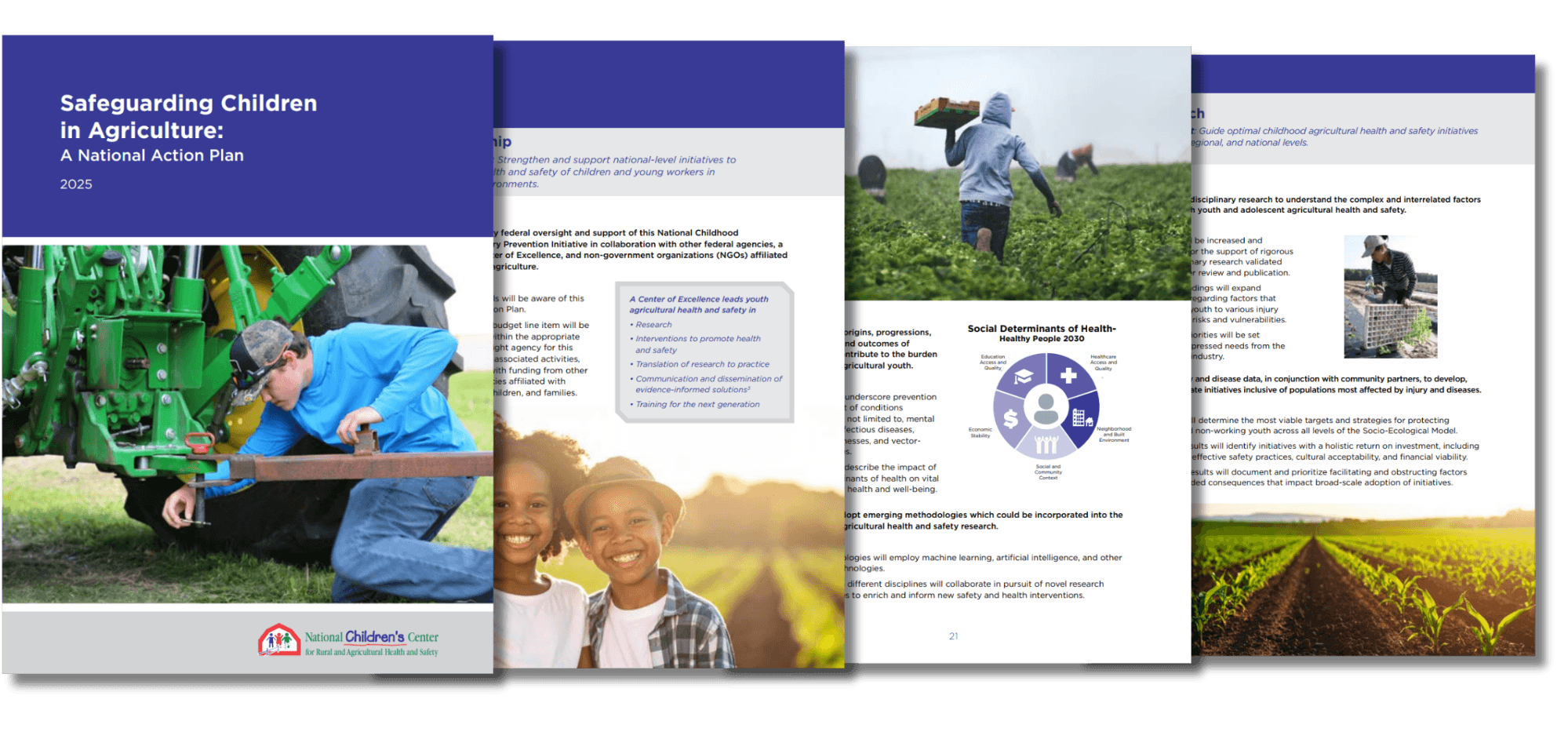
MCN recommends “Safeguarding Children in Agriculture: A National Action Plan 2025,” from the National Children’s Center for Rural and Agricultural Health and Safety9 to help farms protect children that are working, visiting, and that live on farms. The report is now available in English and Spanish: https://www.marshfieldresearch.org/nccrahs
Lifelong Learning
This vital condition promotes learning and education throughout one’s lifespan, from early childhood experiences through adult education.
MCN offers comic books that cover a wide variety of health-related topics in English and Spanish, like: How to Control your Hypertension10, Those Who Seek, Find: Learning About Health Services11, and Clear the Air: Protect Yourself from Bad Air.12 Visit www.migrantclinician.org/comics.

Reliable Transportation
Reliable, safe, and accessible transportation would allow farmworkers to get to work, school, food, health care, and leisure locations safely and efficiently.
Health Outreach Partners offers a variety of transportation resources for community health centers, including their Transportation Quality Improvement Toolkit13, Transportation Strategies to Improve Health Outcomes14, and The Importance of Screening for Transportation Barriers to Care.15 Visit https://outreach-partners.org/ to access resources and webinars.
Thriving Natural World
Clean air, water, and soil, and healthy ecosystems protect the community from numerous threats including airborne or waterborne illness, flooding, and extreme heat.
Belonging and Civic Muscle
Social support, including freedom to follow the norms and customs, and speak the language of your family or community, and opportunities for civic engagement are included in this vital condition.
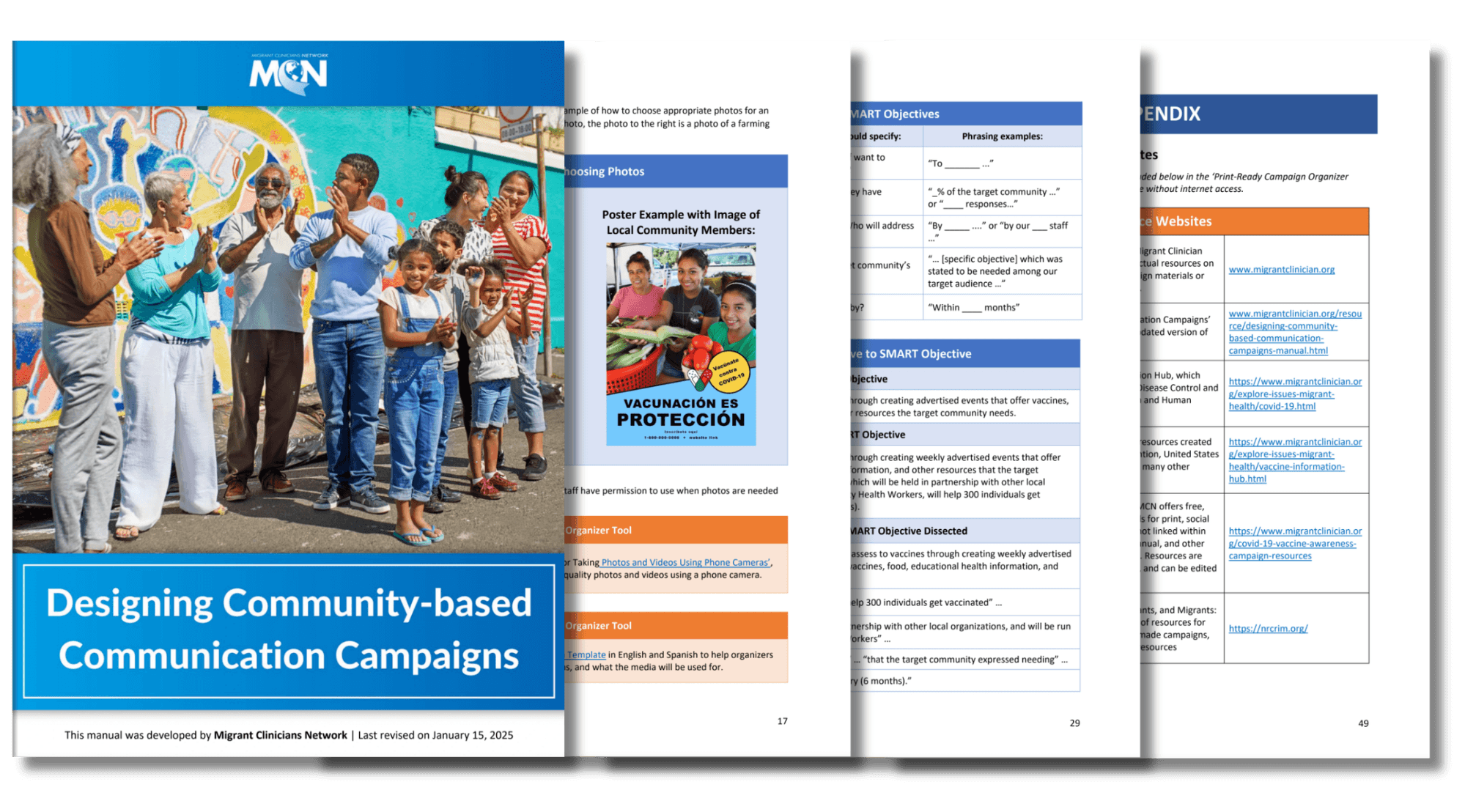
Creating a welcoming environment for farmworkers in our communities bridges differences and provides pathways for farmworkers to engage in community life and take advantage of community offerings. Health centers that collaborate with community-based organizations will be better positioned to support farmworker patients with referrals, social support and educational materials built for the farmworker community. MCN’s in-depth, 70-page guide to building and launching community campaigns assists health centers in reaching and connecting with various members of their community and partnering with community-based organizations. Available in English and Spanish:
- https://www.uscis.gov/tools/reports-and-studies/h-2a-employer-data-hub
- https://www.greenhousegrower.com/management/h-2a-program-sees-massive-growth-in-first-half-of-2026/
- These numbers represent the total number of certified H-2A positions, not unique workers. Some workers may receive more than one H-2A position per fiscal year.
- Frontiers | Precarious work and chronic disease: lessons learned from the US national agricultural worker survey (1999–2020). Available at: https://www.frontiersin.org/journals/public-health/articles/10.3389/fpubh.2025.1651197/full
- Frontiers | Chronic disease burden among Latino farmworkers in California. Available at: https://www.frontiersin.org/journals/public-health/articles/10.3389/fpubh.2022.1024083/full
- Advancing the Health of Migrant and Seasonal Farmworkers in the United States on JSTOR Available at: https://www.jstor.org/stable/27346452
- https://rippel.org/vital-conditions/
- https://www.nachc.org/resource/vital-conditions-for-health-and-well-being/
- https://marshfieldresearch.org/nccrahs/nap/2025
- https://www.migrantclinician.org/resource/how-control-your-hypertension-comic.html
- https://www.migrantclinician.org/resource/those-who-seek-find
- https://www.migrantclinician.org/resource/clear-air-protect-your-health-bad-air.html
- https://outreach-partners.org/2025/10/transportation-quality-improvement-toolkit-2/
- https://outreach-partners.org/2025/02/improving-health-outcomes-for-transportation/
- https://outreach-partners.org/2020/09/the-importance-of-screening-for-transportation-barriers-to-care/
This article is supported by the Health Resources and Services Administration (HRSA) of the U.S. Department of Health and Human Services (HHS) as part of an award totaling $1,204,180.00 with 0 percentage financed with non-governmental sources. The contents are those of the author(s) and do not necessarily represent the official views of, nor an endorsement by HRSA, HHS, or the U.S. Government. For more information, please visit HRSA.gov.