CDC’s 10 ACE Categories, Organized into Three Domains
Abuse
1. Physical,
2. Emotional, or
3. Sexual
Neglect
4. Physical or
5. Emotional
Household challenges (originally phrased as “household dysfunction”; reframed by the CDC in 2015), caused by having a household member who:
6. Experienced mental illness
7. Used substance(s)
8. Experienced intimate partner violence (initially queried as violence towards the mother or stepmother)
9. Was absent because of divorce or separation, or
10. Was incarcerated.
In 2019, the Office of the California Surgeon General launched a comprehensive statewide program to improve outcomes for individuals exposed to Adverse Childhood Experiences (ACEs). ACEs are events in a child’s life (ages 0-17) that can be traumatic which fall into one or more of the 10 categories of adversities defined by the Centers for Disease Control and Prevention.1 (See box for the categories.) Nationwide, 64% of adults have reported that they had experienced at least one ACE during childhood. Over 17% reported experiencing four or more ACEs.
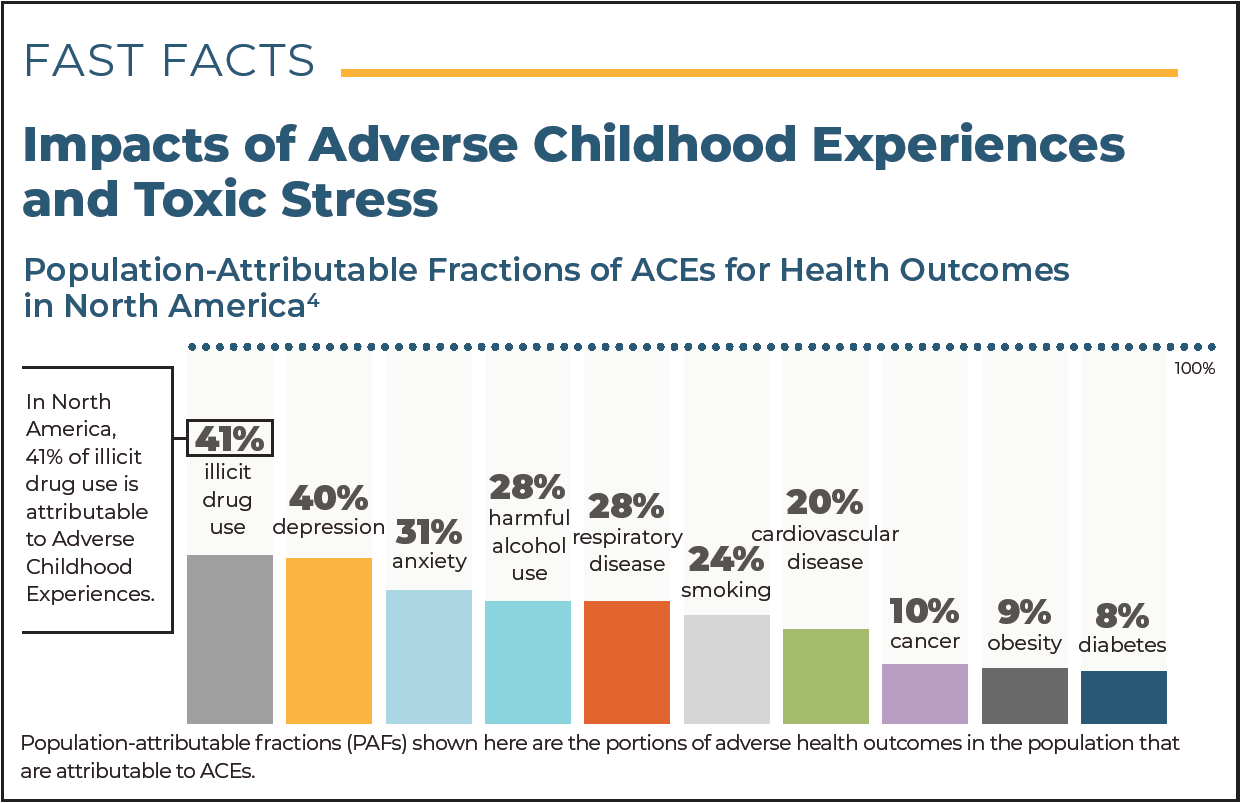
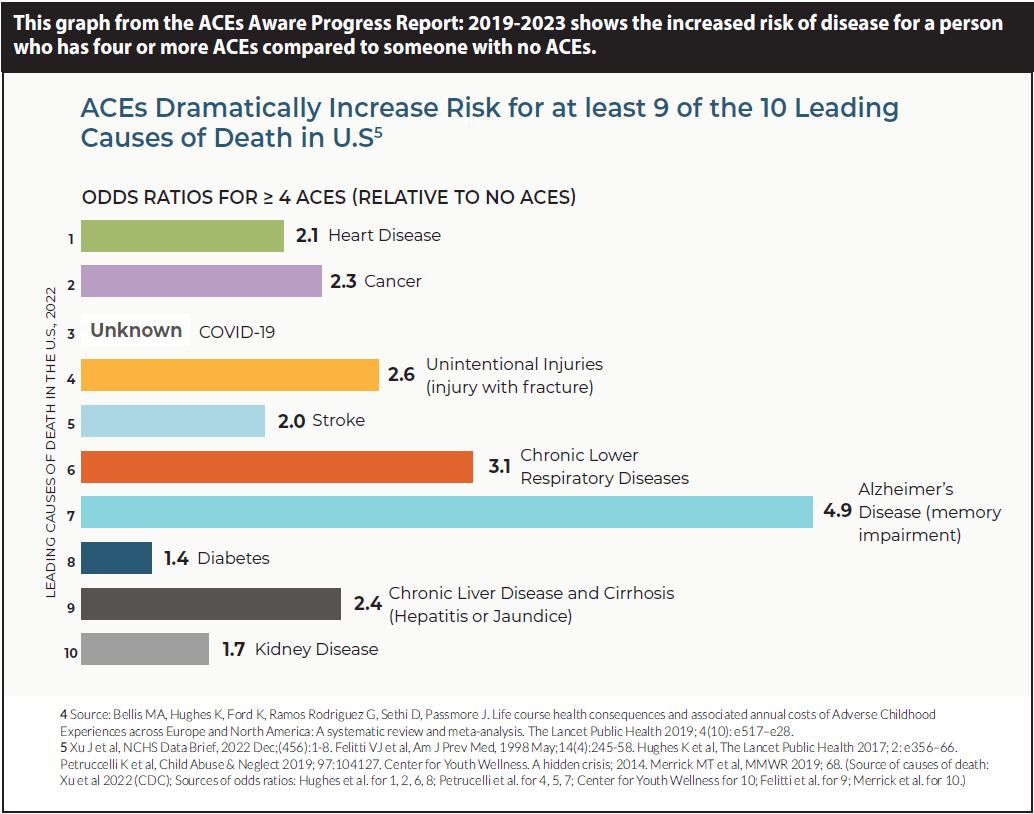
Those with four or more ACEs, compared to a person with no ACEs, have greater risks of heart disease, cancer, unintentional injuries, stroke, chronic lower respiratory disease, Alzheimer’s, diabetes, chronic liver disease and cirrhosis, and kidney disease. Significant percentages of leading health issues are attributable to ACEs. (See graphs.)
This initiative, ACEs Aware, was predicated on this growing understanding that ACEs are one of the “upstream factors” that contribute to higher rates of common health challenges.2 The initiative’s goals include engaging members as owners of their own care; keeping families and communities healthy via prevention; providing early interventions for rising risk and patient-centered chronic disease management; and providing whole person care for high-risk populations. To meet these goals, the initiative supports two primary avenues: clinician education and training on screenings, and community and clinic investments to build ACE awareness and create community-level partnerships, infrastructure, engagement, and networks of care, for effective community-wide ACE prevention, identification, and response. MCN’s project, NACES, was funded through this initiative.
In the first four years of ACEs Aware, 35,360 individuals completed their training, and 17,100 clinicians who accept Medi-Cal, California’s Medicaid, are now ACEs Aware certified. Most indicated that they would begin to screen for ACEs, and they did – over 2,326,360 ACE screenings were conducted from January 2020 to March 2023. Clinicians can provide additional education and resources to screened patients with ACEs, to give patients concrete pathways to meet their potentially greater mental and physical health needs. ACEs Aware-certified clinicians are eligible for a $29 payment per screening of a Medi-Cal patient.3
Citations
1 Centers for Disease Control and Prevention. About Adverse Childhood Experiences. 8 October 2024. Accessed 2 June 2025. Available at: https://www.cdc.gov/aces/about/index.html
2 ACEs Aware. ACEs Aware Progress Report: 2019-2023. Accessed 2 June 2025. Available at: https://www.acesaware.org/progress-report-2023/
3 ACEs Aware. Medi-Cal Certification and Payment. Accessed 3 June 2025. Available at: https://www.acesaware.org/wp-content/uploads/2020/05/Provider-Toolkit-Medi-Cal-Certification-and-Payment.pdf