Depression is characterized by sadness, emptiness, and/or an irritable mood, along with cognitive or sleep pattern changes that affect an individual’s ability to function normally.1 Among US migratory and seasonal agricultural workers (MSAWs), depression appears widespread, although estimates vary and more studies need to be conducted. A 2013 study of 200 mobile workers found that 45.8% were depressed, while a meta-analysis concluded that overall prevalence of depression among mobile workers was 26% although individual studies showed significant variation.23 Additionally, people in families with the lowest income levels, regardless of occupation, have higher depression prevalence;4 MSAW families often live below the poverty line. Depression is not just a mental health concern; depression affects physical and cognitive functioning, and is linked to cardiovascular disease,5 memory decline,6 and nervous, immune, and digestive system impacts.7
The causes of depression are complex and various, including social and biological factors, from hormonal changes to life stress to living in poverty to living with chronic illness. What specific factors relating to farm work increases the risk of depression among MSAWs? Recent interviews with farmers in Georgia, for example, found that financial factors, work-life balance, physical health, and disconnect from non-farming populations were each compounding stressors. Farmers felt misperceived by their community and a lack of control on external factors.8 With fewer studies on MSAWs, it is unclear how many of these stressors overlap.
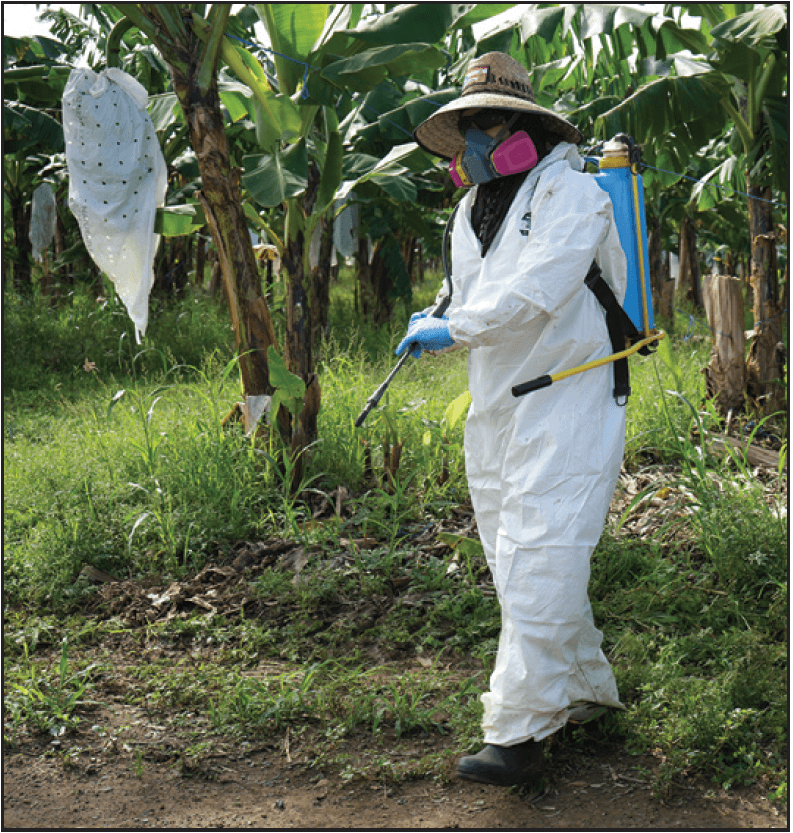
Among MSAWs, an added component may be exposure to pesticides. A 2023 meta-analysis and systematic review published in the Journal of Agromedicine found a significant positive association between pesticide poisoning and depression, although the study also found a non-significant positive association between pesticide use and depression.9 Another global systematic review in 2023 focused on farmers and MSAWs similarly found that previous pesticide poisoning increased the risk of depression, compared to chronic pesticide exposure, and that severe and/or repeated pesticide poisonings increased risk of depression compared to mild exposures.10
The mechanisms by which pesticide poisonings increase risk of depression are several. A 2024 study in Toxicology found that inflammation, oxidative distress, and lower educational levels may be associated with depression among rural workers who were exposed to pesticides. The authors also noted that the underutilization of personal protective equipment increases the risk of exposure and can be an important safety measure.11 The troubling experience of pesticide exposure is another factor that may contribute to the link between pesticide poisonings and depression. In a recent MCN webinar, “Diagnosis and Management of Pesticide-Related Illness,” the first in the three-part How to Prevent Pesticide Poisoning in Farmworkers series, Brett Shannon, MD, PhD noted that “it’s really important to consider that exposure to pesticides, and exposure to any other work hazards, is…for many workers… something that could potentially kill them, it's something that's very scary for them, and you [should] consider examining their mental health during and after the incident.”12
The increased number of high heat days may be another risk factor. Farmworkers are highly exposed to extreme heat, and increased heat and extreme temperatures raise the incidence of changes in mental health outcomes; for example, heat waves were associated with an increase in hospital attendance or admission for mental illness.13
Protective factors may be limited by MSAW lifestyles. Social support and a sense of belonging are two critical protective factors cited by farmers and farm residents in one survey;14 both are likely to be absent in a temporary MSAW community, like among H-2A workers.
Clinicians serving MSAW communities are encouraged to assess pesticide exposure in their patients who are presently in farm work or have a history working on farms.
- MCN’s recent three-part webinar series on How to Prevent Pesticide Poisoning in Farmworkers is archived on our website in English and Spanish. https://www.migrantclinician.org/webinar/diagnosis-and-management-pesticide-related-illness-how-prevent-pesticide-poisoning
- MCN’s Environmental and Occupational Health screening questions for primary care, in English and Spanish, can assist: https://www.migrantclinician.org/toolsource/resource/eoh-screening-questions-primary-care.html
- MCN’s low-literacy comic books in Spanish are designed with MSAWs in mind. These comic books address key concerns in MSAW communities, including exposure in women of reproductive age, exposure among children, and pesticides and respiratory health. https://www.migrantclinician.org/pesticide-comic-books.html
- Recognition and Management of Pesticide Poisonings 6th Edition is EPA’s essential clinical reference for recognizing and managing pesticide overexposures. https://www.epa.gov/pesticide-worker-safety/recognition-and-management-pesticide-poisonings
Clinicians are also encouraged to screen patients with a history of farm work for depression. Here are some resources on depression:
- NIWAP’s Patient Health Questionnaire PHQ-9 in Spanish: https://niwaplibrary.wcl.american.edu/wp-content/uploads/2015/pdf/TRAUM-Temp-PHQ9QuestionnaireSpanish.pdf
- Mental Health America’s Life with Depression Fact Sheet in Spanish
https://mhanational.org/es/resources/life-depression/ - Mental Health America’s resource center in Spanish
https://mhanational.org/resources/recursos/
Citations
1 Chand SP, Arif H. Depression. In: StatPearls. Treasure Island (FL): StatPearls Publishing; July 17, 2023. https://www.ncbi.nlm.nih.gov/books/NBK430847/
2 Ramos AK, Su D, Lander L, Rivera R. Stress Factors Contributing to Depression Among Latino Migrant Farmworkers in Nebraska. J Immigr Minor Health. 2015;17(6):1627-1634. doi:10.1007/s10903-015-0201-5
3 Hagen BNM, Winder CB, Wootten J, McMullen CK, Jones-Bitton A. A Systematic Review and Meta-Analysis of Depression among Farming Populations Worldwide. Int J Environ Res Public Health. 2020;17(24):9376. Published 2020 Dec 15. doi:10.3390/ijerph17249376
4 Brody DJ, Hughes JP. Depression prevalence in adolescents and adults: United States, August 2021–August 2023. 2025 Apr; (527)1–11. DOI: https://dx.doi.org/10.15620/cdc/174579
5 Kwapong YA, Boakye E, Khan SS, et al. Association of Depression and Poor Mental Health With Cardiovascular Disease and Suboptimal Cardiovascular Health Among Young Adults in the United States. J Am Heart Assoc. 2023;12(3):e028332. doi:10.1161/JAHA.122.028332
6 Yin J, John A, Cadar D. Bidirectional Associations of Depressive Symptoms and Cognitive Function Over Time. JAMA Netw Open. 2024;7(6):e2416305. Published 2024 Jun 3. doi:10.1001/jamanetworkopen.2024.16305
7 Pietrangelo A. The Effects of Depression on Your Body. Healthline. Updated 5 July 2025. https://www.healthline.com/health/depression/effects-on-body
8 Proctor C, Hopkins N. Stressors and Coping Strategies in Rural Farmers: A Qualitative Study. J Agromedicine. 2023 Jul;28(3):415-424. doi: 10.1080/1059924X.2023.2173691. Epub 2023 Feb 6. PMID: 36702813.
9 Frengidou E, Galanis P, Malesios C. Pesticide Exposure or Pesticide Poisoning and the Risk of Depression in Agricultural Populations: A Systematic Review and Meta-Analysis. J Agromedicine. 2024;29(1):91-105. doi:10.1080/1059924X.2023.2278801
10 Zanchi MM, Marins K, Zamoner A. Could pesticide exposure be implicated in the high incidence rates of depression, anxiety and suicide in farmers? A systematic review. Environ Pollut. 2023;331(Pt 2):121888. doi:10.1016/j.envpol.2023.121888
11 Zanchi, M. M., Marafon, F., Marins, K., Bagatini, M. D., & Zamoner, A. (2024). Redox imbalance and inflammation: A link to depression risk in brazilian pesticide-exposed farmers. Toxicology, 501, 153706. https://doi.org/10.1016/j.tox.2023.153706
12 How to Prevent Pesticide Poisoning in Farmworkers. Migrant Clinicians Network. Archived webinar, 1 October 2024. Available at: https://www.migrantclinician.org/webinar/diagnosis-and-management-pesticide-related-illness-how-prevent-pesticide-poisoning
13 Thompson R, Lawrance EL, Roberts LF, et al. Ambient temperature and mental health: a systematic review and meta-analysis [published correction appears in Lancet Planet Health. 2023 Sep;7(9):e735. doi: 10.1016/S2542-5196(23)00172-9.]. Lancet Planet Health. 2023;7(7):e580-e589. doi:10.1016/S2542-5196(23)00104-3
14 Riethmuller ML, Newnham EA, McEvoy PM. Supporting mental health in farming communities where and when it is needed most: A longitudinal analysis of risk and protective factors. Soc Sci Med. 2024;361:117381. doi:10.1016/j.socscimed.2024.117381