Pasar al contenido principal
x

Resources By Category


«Mi salud es mi tesoro: Abrazando la vida con diabetes» es un libro cómico a todo color en español que muestra la historia de Goyo mientras va aprendiendo a vivir con diabetes tipo 2. 

Goyo, un trabajador agrícola, se hace amigo de Chela, otra trabajadora agrícola quien sabe muy bien cómo es vivir con diabetes. Chela anima a Goyo a que cuide de su bienestar emocional y le muestra que puede encontrar apoyo en la comunidad.

Este libro cómico ofrece herramientas sencillas y prácticas para manejar el estrés y cuidar del bienestar de una manera culturalmente adecuada y accesible. Fue originalmente desarrollado en español y traducido en inglés.
 

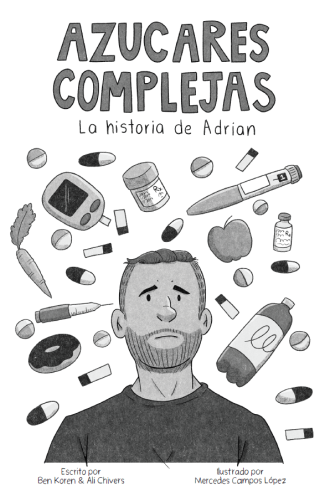
Esta es la verdadera historia de Adrián, su diagnóstico de diabetes y su aprendizaje gradual para retomar el control de su salud y encontrar maneras de vivir plenamente con una condición que presenta desafíos diarios.

El guión de este cómic se basó en una entrevista con Adrián, fue escrito por Ben Koren y Ali Chivers,  illustrado por Mercedes Campos López y editado por Enrique Campos Nañez.

Download Resource


El humo de los incendios forestales trae consigo un riesgo significativo para la salud y, especialmente, para las poblaciones vulnerables como las de los trabajadores agrícolas, dada la naturaleza de su trabajo y exposición prolongada al aire libre. Esta guía proporciona a los proveedores de servicios de salud y a los trabajadores de salud comunitarios (CHWs por sus siglas en inglés) una visión general de los efectos de la exposición al humo de los incendios forestales; las razones por las que los trabajadores agrícolas son más vulnerables al humo de los incendios forestales; consideraciones específicas para los trabajadores agrícolas y, estrategias prácticas para tomar medidas preventivas.

National STD Curriculum from the University of Washington STD Prevention Training Center. Provides information on different STDs and STIs, which are available for Quick Reference. There is also the option to Self-Study, allowing the user to track progress and receive Continuing Education credit.

From the CDC Morbidity and Mortality Weekly Report, Vol. 70, No. 4, published July 23, 2021. 

Summary: "These guidelines for the treatment of persons who have or are at risk for sexually transmitted infections (STIs) were updated by CDC after consultation with professionals knowledgeable in the field of STIs who met in Atlanta, Georgia, June 11–14, 2019. The information in this report updates the 2015 guidelines. These guidelines discuss 1) updated recommendations for treatment of Neisseria gonorrhoeae, Chlamydia trachomatis, and Trichomonas vaginalis; 2) addition of metronidazole to the recommended treatment regimen for pelvic inflammatory disease; 3) alternative treatment options for bacterial vaginosis; 4) management of Mycoplasma genitalium; 5) human papillomavirus vaccine recommendations and counseling messages; 6) expanded risk factors for syphilis testing among pregnant women; 7) one-time testing for hepatitis C infection; 8) evaluation of men who have sex with men after sexual assault; and 9) two-step testing for serologic diagnosis of genital herpes simplex virus. Physicians and other health care providers can use these guidelines to assist in prevention and treatment of STIs."

Download Resource

CDC framework for assisting clinicians in discussing the sexual health issues of a patient in order to obtain a more complete picture of the patient's overall health. The guide covers the clinical environment, the Five "P"s, and other dialogue with the patient that may arise by the end of the session.

CDC Guidelines, for clinicians, on the use of doxy PEP for the prevention of bacterial STIs. Provides education on prescribing doxy PEP (such as who benefits and for which STIs, potential side effects, etc.), what is still being researched, and a list of additional resources.


Los grandes también se vacunan es una herramienta educativa en forma de cómic para los promotores o educadores de salud que trabajan con la comunidad y que necesitan proporcionar información sobre la vacunación, cuándo y dónde se aplican y cuáles son los síntomas que caracterizan las enfermedades que previenen.  

A través de la conversación de unos trabajadores en el campo, este cómic colorido y de fácil comprensión, ayuda a sus lectores a aprender de forma sencilla y natural información sobre la importancia de vacunarse y de reforzar las vacunas en la edad adulta para prevenir enfermedades como hepatitis B, meningitis, varicela, influenza, tétano, difteria, tosferina, sarampión, paperas, rubeola y COVID-19.


Covid-19 y nuestra comunidad ¡Más vale prevenir que lamentar! es un  material educativo para apoyar la labor de los promotores de salud comunitaria  sobre COVID-19 y su prevención. Se complementa con  una guía con sugerencias concretas de como usar el rotafolio y enlaces a recursos  para quienes quieren profundizar en el tema e investigar si hay algún cambio en la información.

El rotafolio incluye conceptos básicos de COVID-19, la prevención y la vacunación en forma de mensajes claros y sencillos  que se  apoyan en ilustraciones culturalmente apropiadas para facilitar el proceso de comunicación y transmisión de información a los miembros de la comunidad. Usted puede descargar gratuitamente estos recursos tanto en inglés como en español.

Entre las múltiples obligaciones que tienen los proveedores de salud con sus pacientes, sus familiares y la vida en general, se les olvida colocarse en la lista de prioridades. Este libro cómico dedicado a los proveedores de salud les recuerda lo importante que es cuidarse para poder atender las necesidades de sus pacientes y familiares. También ofrece simples pasos de autocuidado para mejorar el bienestar en general.

Este libro comic nos cuenta cómo Juan aprendió a protegerse de los pesticidas en el trabajo. Este recurso presenta de una manera muy sencilla y amena cuáles son las fuentes de exposición a los pesticidas, sus efectos en el cuerpo a corto y largo plazo y qué se puede hacer para protegerse de éstos. ¡Es un gran recurso para trabajadores del campo y promotores de salud!

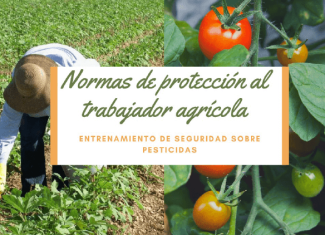
Currículo de entrenamiento sobre las normas de protección al trabajador agrícola y su seguridad sobre los pesticidas -Un currículo cultural y lingüísticamente apropiado con recursos de apoyo para entrenar a los trabajadores sobre las Normas de Protección del Trabajador actualizada. Este currículo fue desarrollado por el Proyecto PISCA de la Universidad Estatal de Florida y la Red de Proveedores de Servicios de Salud para Migrantes.


La diabetes es una condición de salud común pero complicada que enfrentan los trabajadores agrícolas en los Estados Unidos. Para ayudarles a conocer sobre esta enfermedad, Migrant Clinicians Network se asoció con Salvador Sáenz (artista profesional y coloborador) para crear "Mi salud es mi tesoro: una guía para vivir bien con diabetes". Este libro cómico en español explora el tema a través de la historia de un trabajador agrícola llamado Goyo, quien recientemente fue diagnosticado con diabetes.  En la historia Goyo entable conversaciones con otros trabajadores agrícolas sobre dieta, ejercicio, enfermedad, y prevención mientras enfrenta los retos particulares de vivir como migrante.


Offers basic screening questions, common occupations and ailments associated with them, as well as recommended treatment. Also includes sample letters from clinicians to employers for restricted work.

"Coccidioidomycosis or Valley Fever is an infectious disease in parts of the U.S.A. It is caused by inhaling microscopic arthroconidia (also known as arthrospores or spores) of the closely related fungal species Coccidioides immitis and C. posadasii. Areas where Coccidioides is endemic (native and common) include states in the southwestern U.S.A. such as Arizona, California, New Mexico, Nevada, Texas, and Utah and parts of Mexico, Central America and South America."


Safety and Health Practicesfor Nail Salon Workers

Safety and Health Practicesfor Nail Salon Workers and a Training Guide for Nail Salon Worker Safety and Health Outreach Program


Download Resource

DATE: May 24, 2017, 1 pm (ET)

SPEAKERS: Juliana Simmons, MSPH, CHES


Recorded WebinarParticipant EvaluationPresentation SlidesResources


Continuing Education Credit

To receive CME* or CNE credit after viewing this webinar, you must:

Complete the Participant Evaluation associated with this webinarSend an email with your first and last name stating which webinar you completed to contedu@migrantclinician.org


Description

​José Navarro was excited for his new career after landing a job in the poultry industry. After five years on the job, 37 year-old Navarro began coughing up blood. He died soon after when his lungs and kidneys failed. His death triggered a federal investigation raising questions about the health risks associated with the use of toxic chemicals in poultry plants.

Millions of workers are exposed to chemicals everyday on the job. All workers have the right to know about the chemicals they work with and community health workers can be an important source of information and support for workers. This workshop will teach community health workers how to explain what happens when someone is exposed to chemicals and how workers can best protect themselves


Learning ObjectivesRecognize how workers become exposed to chemicals and illnessesDescribe basic safety practices when working around chemicalsUnderstand the role of community health workers in identifying and preventing work related illnesses and hazards


This project is supported by the Health Resources and Services Administration (HRSA) of the U.S. Department of Health and Human Services (HHS) under cooperative agreement number U30CS09742, Technical Assistance to Community and Migrant Health Centers and Homeless for $1,094,709.00 with 0% of the total NCA project financed with non-federal sources. This information or content and conclusions are those of the author and should not be construed as the official position or policy of, nor should any endorsements be inferred by HRSA, HHS or the U.S. Government.
 

Available in English and Spanish!


Created by MCN, medical student Rachel Kelley of UCSF, and collaborators at East Tennessee State University, this guide is intended to be a reference for health care providers who work with people employed in the U.S. tomato industry. It aims to prepare providers with a more detailed understanding of hazards, health issues, and work processes associated with different tomato industry jobs.

This guide draws on published research, experienced health professionals’ advice, and information gathered from interviews and focus groups conducted with 36 tomato workers from diverse backgrounds and 14 community leaders familiar with tomato workers’ health in multiple states. It is important to note that health and safety conditions at any particular farm or company may vary from what is described here. Furthermore, individual workers may experience the same set of conditions differently.

The first section of the guide focuses on health hazards and health conditions commonly encountered in tomato production. The second section consists of detailed descriptions and illustrations of different tomato production tasks. The third section covers “human resources” information and policies that apply to U.S. agricultural workers generally. The appendices contain a Spanish-English glossary, further detail about different types of pesticides, information about agricultural occupational health policies and regulation, and a list of resources and readings.

Una guía para saber cómo reaccionar cuando vea que acosan a alguien. La ilustración artística y el guión  son de Uriel Saenz y Alma Galván


Libro cómic educativo bilingüe sobre cómo prevenir las enfermedades zoonóticas. Desarrollado por MCN en colaboración con la Universidad Estatal de Ohio.


MCN y Farmworker Justice ofrecen estas guías para ayudar a los médicos en la comprensión de regulaciones de salud y seguridad de los  campesinos.  Información de los Estándares  de Saneamiento de  la Administración de Seguridad y Salud Ocupacional (OSHA) para los campos; la  Ley Federal de Insecticidas, Fungicidas y Rodenticidas (FIFRA) regulado por la Agencia de Protección Ambiental (EPA); la Ley de la Protección de la Calidad de los Alimentos (FQPA) también regulado por el EPA; y el estándar de protección del trabajador (WPS) establecido por el  EPA.

MCN y Farmworker Justice ofrecen estas guías para ayudar a los proveedores de servicios de salud a comprender las regulaciones de salud y seguridad de los trabajadores agrícolas.  Información de los Estándares  de Saneamiento de la Administración de Seguridad y Salud Ocupacional (OSHA) para los campos; la Ley Federal de Insecticidas, Fungicidas y Rodenticidas (FIFRA) regulado por la Agencia de Protección Ambiental (EPA); la Ley de la Protección de la Calidad de los Alimentos (FQPA) también regulado por el EPA; y el estándar de protección del trabajador (WPS) establecido por el EPA.


Este diccionario ilustrado bilingüe de MCN, "Seguridad en Palabras/ Safety in Words", muestra los peligros que hay en el lugar de trabajo y las mejores prácticas para la salud y la seguridad en la agricultura. Desarrollado con el apoyo del Programa de Subvenciones Susan Harwood de OSHA, este recurso refuerza el vocabulario en inglés de los trabajadores que hablan español lo que ayudará a prevenir lesiones en la agricultura. 

Download Resource

Three concise and effective environmental/occupational health screening questions for the primary care provider. English and Spanish. MCN, 2014.

An EHR-friendly version of these screening questions was developed through MCN's Workers & Health Program. This can be used as a reference for integration into the health center's Electronic Health Record. 

Download Resource